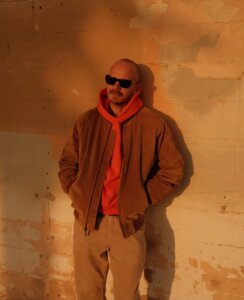
For Paris-based photographer and film director Emmanuel Giraud, the strongest image is never simply an image of beauty. It is a meeting point between instinct, trust, fashion, and the private world a subject brings in front of the lens. From luxury campaigns to international editorial stories and portraits of some of cinema’s most recognizable faces, Giraud has developed a visual language that feels both polished and emotionally alive.
There is a distinct tension in Emmanuel Giraud’s work: a cinematic sense of control, softened by the feeling that something unexpected might still happen. In black and white, his photographs have the atmosphere of a film still. In color, they are vivid, sensual, and often charged with a rawer emotion. It is an approach shaped in part by the seven years he spent in Australia, where he received the Fashion category honor in Capture magazine’s 2011 Emerging Photographer of the Year Awards, before making Paris the base for an international career spanning fashion, beauty, celebrity, and film.
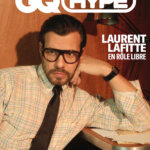
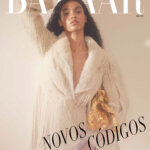
His work was featured by Vogue Italia in its Talents coverage early in his career, while his short film Lanvin Instinctlater received a Best Art Direction nomination at the Madrid Fashion Film Festival. Since then, Giraud has worked with houses and beauty brands including Dior Parfums, Balmain, Lanvin, Saint Laurent, Louis Vuitton, Chanel, Longines, Armani Beauty, Celine, Valentino Beauty, and Zadig & Voltaire. His editorial work has appeared across international editions of Vogue, Harper’s Bazaar, Numéro, GQ, Arena Homme+ Korea, Man About Town China, Flaunt, Puss Puss, and Behind the Blinds.
The names in front of his camera tell their own story: Natalie Portman, Robert Pattinson, Kate Winslet, Daniel Craig, Camille Cottin, Laetitia Casta, Tahar Rahim, Stacy Martin, Regé-Jean Page, Jackson Wang, Simu Liu, and Kit Butler among them. Yet Giraud speaks less about status than connection. As Lead Photographer for Vanity Fair France’s ambitious Léna Mahfouf series, he directed a large-scale shoot bringing together eleven personalities in a single day at the Grand Rex in Paris. The images ran in print and as digital covers before being exhibited in Cannes in 2024.
BELLO sat down with Emmanuel Giraud to talk about the journey behind the images, the responsibility of photographing public figures, the future of fashion photography, and why human connection will always matter more than a perfect picture.
BELLO: You have built a career across fashion, celebrity, beauty, and film. What first drew you to photography?
Emmanuel Giraud: I was drawn to photography because it gave me a way to translate what I felt but could not always explain in words. I was always fascinated by the way one image could hold an entire atmosphere: desire, freedom, youth, loneliness, elegance, or even a small sense of danger. Fashion gave me a language for that. It is a world of surfaces, of course, but it can also be deeply emotional when you look beneath them.
Living in Australia was an important chapter in my development. It gave me distance, space, and a different relationship to light. I learned to observe before trying to impose an idea. Receiving recognition from Capture magazine early on was encouraging, but the most important lesson was simpler: I understood that I wanted to build a career through images that felt personal, not just technically correct.
When I came to Paris, I arrived with ambition but also with humility. I knew that fashion photography was not only about having a strong portfolio. It was about learning how to collaborate, how to listen, how to guide a team, and how to remain curious through every stage of a production.
BELLO: How did Australia continue to influence your eye once you began working in Paris?
Emmanuel Giraud: Australia gave me a very emotional relationship with landscape, light, and freedom. I spent seven years there, and I think it taught me not to over-intellectualize the first feeling of an image. There is a physical quality to the light there, something open and direct, that stayed with me.
Paris then gave that instinct a different structure. It is a city built on references: cinema, literature, photography, fashion history, architecture. The dialogue between those two worlds became part of my work. I like images that are carefully composed but do not feel trapped by their composition. I like beauty with a little friction in it. A photograph can be glamorous, but it should still breathe.
That is why my black-and-white work often leans toward a cinematic mood, while my color work can be more immediate and emotional. I am interested in the moment when reality shifts slightly: when someone is clearly present in the frame, but you can also feel what they may be remembering, imagining, or dreaming.
BELLO: You moved quickly into major editorial and commercial work. What were the early projects that helped define your path?
Emmanuel Giraud: My first major fragrance campaign with Zadig & Voltaire was an important turning point. Beauty and fragrance are incredibly demanding because the image has to carry so much: a mood, a product, a brand history, a sense of aspiration, and still a human feeling. It taught me how much precision is required to make an image feel effortless.
The recognition from Vogue Italia was also meaningful at a formative moment in my career. It made me feel that the visual vocabulary I was developing could travel beyond the place where I started. Later, directing Lanvin Instinctallowed me to explore another side of my work. Film asks for rhythm, movement, and duration; photography asks you to distill everything into one instant. I love moving between the two because each discipline keeps the other alive.
Over time, I have learned that a career is not built through one defining project. It is built through consistency, through the trust of collaborators, and through being ready when a project becomes more ambitious than anything you have done before.
BELLO: Your images often feel highly constructed, yet never overly rigid. How do you describe your signature?
Emmanuel Giraud: I am very attentive to the frame, to light, to color, and to the smallest details, but I do not want the person in front of me to feel like they are entering a machine. My goal is to create a space where the subject can bring something that was not on the mood board.
I usually begin with a clear intention. I know what the image should communicate and what emotional temperature I am looking for. But a photograph becomes interesting when the person in it gives you something more than the plan. A gesture, a pause, a glance away from the camera, an unexpected way of standing. Those moments cannot be forced.
I think my signature comes from that balance: a refined image with room for life inside it. I want people to feel the craft, but I also want them to feel a person. The most memorable photographs are rarely the ones that tell you everything immediately.
BELLO: You have photographed actors, musicians, models, designers, and public figures including Natalie Portman, Robert Pattinson, Kate Winslet, Daniel Craig, Camille Cottin, Laetitia Casta, Tahar Rahim, and Jackson Wang. What does a great celebrity portrait require?
Emmanuel Giraud: First, it requires respect. A public figure spends a lot of time being looked at, interpreted, and projected onto by other people. The camera can become another form of pressure if you do not create the right atmosphere. I never want someone to feel that they have to perform a version of themselves that has already been decided by the world.
Preparation matters. I study the person’s work, their history, their relationship to fashion, and the context of the project. But I try not to arrive with too many assumptions. What makes a portrait valuable is often the gap between the public image and a quieter truth that appears on set.
The job is partly psychological. You need to know when to speak, when to give direction, when to make someone laugh, and when to let silence do the work. With a celebrity, time is often limited, so trust must happen quickly. I like to create a calm set, even when the production is complex. The goal is for the person to feel protected enough to take a risk.

BELLO: What have these collaborations taught you about leadership on set?
Emmanuel Giraud: Leadership is not about making the most noise in the room. It is about having a clear vision while helping everyone feel that their contribution matters. A great shoot is never made by one person. It comes from the intelligence of a stylist, the instincts of a makeup artist, the precision of a lighting team, the patience of a producer, and the confidence of the subject.
I try to be demanding without making people afraid of the process. I care deeply about details, but I also believe that generosity creates better work. When people are relaxed, they can be brave. When they feel seen, they usually give more than you expected.
The Vanity Fair France project with Léna Mahfouf was a perfect example. We had eleven personalities to photograph in one day, in different cinematic environments inside the Grand Rex. It was a large and complex production, but the challenge was not only logistical. We had to make every person feel distinct while keeping the entire story coherent. My role as Lead Photographer was to hold that visual thread from beginning to end.
BELLO: That Vanity Fair France story later extended to print, digital covers, and an exhibition in Cannes. What stayed with you from that experience?
Emmanuel Giraud: What stayed with me was the sense of collective energy. The concept was built around cinema, friendship, influence, and the pleasure of storytelling. The Grand Rex was not just a location; it became part of the narrative. The screen, the seats, the projection, the darkness of the theater, the movement between spectators and performers: all of it gave us material to play with.
The responsibility was to turn an ambitious idea into images that could carry a story across several formats. A print editorial, digital covers, and an exhibition all ask something slightly different from photography, but they need to feel as though they belong to the same world.
I am proud of that project because it represented what I love about this work: the meeting of fashion, culture, personality, and narrative. The best images do not simply document who was there. They create a place the viewer wants to enter.
BELLO: Your work moves naturally between luxury campaigns and magazines such as Vogue, Harper’s Bazaar, Numéro, GQ, Arena Homme+ Korea, Man About Town China, Flaunt, Puss Puss, and Behind the Blinds. What makes editorial work so important to you?
Emmanuel Giraud: Editorial work gives you a particular kind of freedom. A campaign has a very precise responsibility to a brand, while an editorial can allow a more open conversation with a person, a stylist, or an idea. I love both worlds because each sharpens a different part of me.
The magazines I work with internationally have each brought different energies to the collaboration. Some are rooted in heritage and fashion authority; others are more independent, experimental, or playful. I am grateful to move between those spaces. It keeps me from repeating myself.
With titles such as Vogue, Harper’s Bazaar, Numéro, and GQ, there is a long visual history to respect. With publications such as Puss Puss, Flaunt, or Behind the Blinds, I can sometimes push further into an unusual or more provocative visual idea. The important thing is to keep a thread of truth in every image. My work should feel like mine, whether I am photographing a global actor, a new face, or a major fashion house.
BELLO: You also work with some of the most recognizable names in luxury: Dior Parfums, Balmain, Lanvin, Saint Laurent, Louis Vuitton, Chanel, Celine, Longines, Armani Beauty, and Valentino Beauty. What does fashion mean to you beyond clothes?
Emmanuel Giraud: Fashion is a form of storytelling. A garment is never only a garment when it enters an image. It carries a history, an attitude, a memory, and sometimes a contradiction. The same piece can feel protective, seductive, rebellious, romantic, or powerful depending on who wears it and how it is photographed.
That is what makes fashion exciting. It allows you to create a world very quickly. But I also think fashion photography has to remain attentive to the person. Clothes should reveal something, not erase someone. I am always looking for a tension between the fantasy of fashion and the authenticity of the person wearing it.
Working with luxury houses teaches you rigor. These brands have strong identities and a high level of expectation. The challenge is to honor that history while finding a new image that belongs to the present. I enjoy that conversation between heritage and reinvention.
BELLO: As a film director as well as a photographer, do you approach a still image differently from a moving image?
Emmanuel Giraud: Cinema was my first great fascination. I have always been drawn to the way film can create an entire universe: its narrative density, its emotional weight, its capacity to reveal something almost psychological about a character and to bring a story toward a powerful resolution. A film can make you inhabit a world for two hours. Photography has the very different, and equally extraordinary, challenge of suggesting that world in a single instant.
That attraction to cinema made me understand what I was searching for in still images. Photography is a fundamentally separate and unique experience: it is immediate, physical, and concentrated. But I want to bring some of cinema’s magic into it: a sensation of before and after, a feeling that a character has an inner life beyond the frame, or that the image belongs to a larger story we cannot entirely see.
In film, you shape a story through building a narrative. You develop emotion through movement, sound, editing, and time. In photography, you have one frame in which to suggest all of that. I love the pressure of it. My filmmaking practice has made me more aware of rhythm in a photographic sequence. At the same time, photography has taught me discipline in film. It reminds me that every frame has to earn its place.
BELLO: Photography is now produced, consumed, and judged faster than ever. How do you see the current market?
Emmanuel Giraud: The speed can be exciting, but it can also be dangerous. We have more images than ever, more platforms, and more possibilities for visibility. That is wonderful for younger creatives because they can show their work without waiting for permission. But it also means that people can confuse being constantly visible with having a real point of view.
Today, photography is central to content creation and brand building. We help brands create not only an image, but an atmosphere, a lifestyle, a reputation, and a way of being perceived. That work depends on understanding the market, the identity of the brand, and where our own artistic affinities can genuinely meet its needs. It is a fascinating part of the profession, but it is important to distinguish between the volume of commissioned content a brand may need and the more personal artistic expression a photographer needs to pursue.
That distinction is one of the reasons personal projects matter so much. They are not a luxury or a pause between commercial jobs. They are often where a photographer reconnects with what they need to say, without a brief, an algorithm, or an expected result. In the long term, that personal work can also strengthen commissioned work because it protects the artist’s visual identity.
Social media is a powerful tool. It allows us to share, communicate, and create connections with people far beyond our immediate circles. But it should not be reduced to algorithms, likes, or reach. At its best, it can support an artist’s fundamental need to express something that comes from within and to give that expression a place to exist. That is much more valuable than chasing visibility for its own sake.
BELLO: How do you feel about artificial intelligence and its role in the future of image-making?
Emmanuel Giraud: We are facing a genuine technological revolution, and I do not think the question is simply whether we are for or against AI. The more important question is how we learn to integrate it into our own language without betraying our creative and artistic intention.
The creative process should not be judged according to the medium or the tools it uses. Tools exist to be understood and handled as well as possible in order to reach an objective. That objective is not necessarily economic efficiency. It can be the development of an artistic work, the refinement of an idea, or the ability to take a visual project further than we could before.
AI is not an answer on its own, especially when it is used poorly or without intention. It cannot replace artistic direction, sensibility, taste, or a human point of view. But when it is approached with knowledge, it can become a complementary tool within a much larger process. It can help with research, visualization, pre-production, technical experimentation, and sometimes with reaching a project more quickly and with greater precision.
I think much of the fear around AI comes from the fear of human work disappearing. That fear is understandable. But if we remain only in fear, we cannot explore how these tools might support what human beings still need to express. I am not interested in an “all AI” future. I am interested in a constructive use of AI, where the artist remains responsible for the intention, the artistic direction, and the final meaning of the work.
Sometimes I smile at how selectively this debate is framed. People do not always question computer-generated 3D imagery with the same intensity, nor the distance that already exists between photographed reality and the extensive retouching used throughout the image industry. The real conversation should be about authorship, artistic control, transparency, and the quality of the result. We need to take the time to understand these tools before forming a fixed opinion based only on partial information or the most visible uses of platforms such as LLMs.
BELLO: What would you tell a young photographer hoping to enter fashion and celebrity photography today?
Emmanuel Giraud: Before anything else, I would encourage them to ask what truly moves them. Why did they choose photography as a medium? What do they need to express through it? Wanting to make beautiful pictures is a perfectly natural starting point, but it is not enough on its own to sustain a life in photography.
Photography can be a form of self-discovery. In a pure creative moment, in a real state of flow, you can express things that are sometimes unconscious: an emotion, a memory, a fear, a desire, a way of seeing the world that you had not yet put into words. Understanding that deeper reason for making images gives you something much stronger than a trend or a reference board.
It also takes courage. Courage is essential because the profession will test you, creatively and practically. When you have a clear sense of why photography matters to you, and the courage to keep developing that reason over time, you have a powerful foundation for a long career.
Build a point of view before trying to build a client list. Ask yourself what keeps returning in your images. Maybe it is a type of light, an emotion, a color, a way of directing people, or a subject you cannot stop thinking about. Those repetitions are not weaknesses. They are clues to your voice. And do not hesitate to deconstruct everything you have learned. This is the only way to discover what truly matters to your creative practice.
Learn the craft properly. Understand light. Learn how to work with a team. Assist people you admire if you can. Be reliable, organized, generous, and prepared. Talent opens a door, but professionalism is what makes people invite you back.
And do not measure yourself only against other people’s success. Social media can make it seem as though everyone else is moving faster, but a sustainable career is built over time. Make personal work. Be patient with your development. Protect your curiosity. Even when you are making the most polished fashion image, the work becomes meaningful because of the exchange behind it.
BELLO: What still motivates you after so many collaborations and milestones?
Emmanuel Giraud: What matters most to me is the experience I live through on each shoot and the level of awareness I can bring to it. Every production is professional, of course, but it is also personal. You meet people, enter a new space, face a new challenge, and try to make something meaningful with a group of people who have all brought part of themselves to the day.
I still love the first moments of a shoot, when the set is quiet and everything is about to begin. There is always a point where an idea becomes real: the light changes, the person relaxes, the clothes start moving, and suddenly the image is there.
I want to continue making work that crosses boundaries between photography, fashion, cinema, and culture. I am drawn to projects with ambition, but also with heart. The scale can be large or intimate; what matters is that there is something human at stake. The images remain, but the experience of making them is just as important to me.