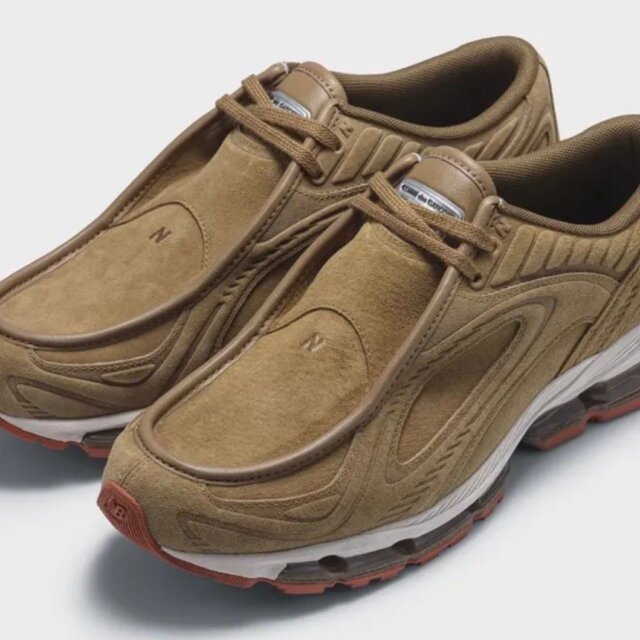
After a Paris Men's Fashion Week debut in January, the tailored 1890A reaches retail on November 6 in black and beige. The change is a single clean panel across the toe.
Comme des Garçons Homme didn’t redraw the New Balance 1890. It changed one panel, and the shoe now looks like it owns a pair of pleated trousers. The Comme des Garçons New Balance 1890A goes on sale November 6, ten months after it first appeared at Paris Men’s Fashion Week in January 2026.
One panel, new proportions
The starting point is New Balance’s 1890, a running shoe that wears its engineering on the outside. Exposed technical elements are part of its look. Comme des Garçons Homme took a quieter approach and put its attention on the upper.
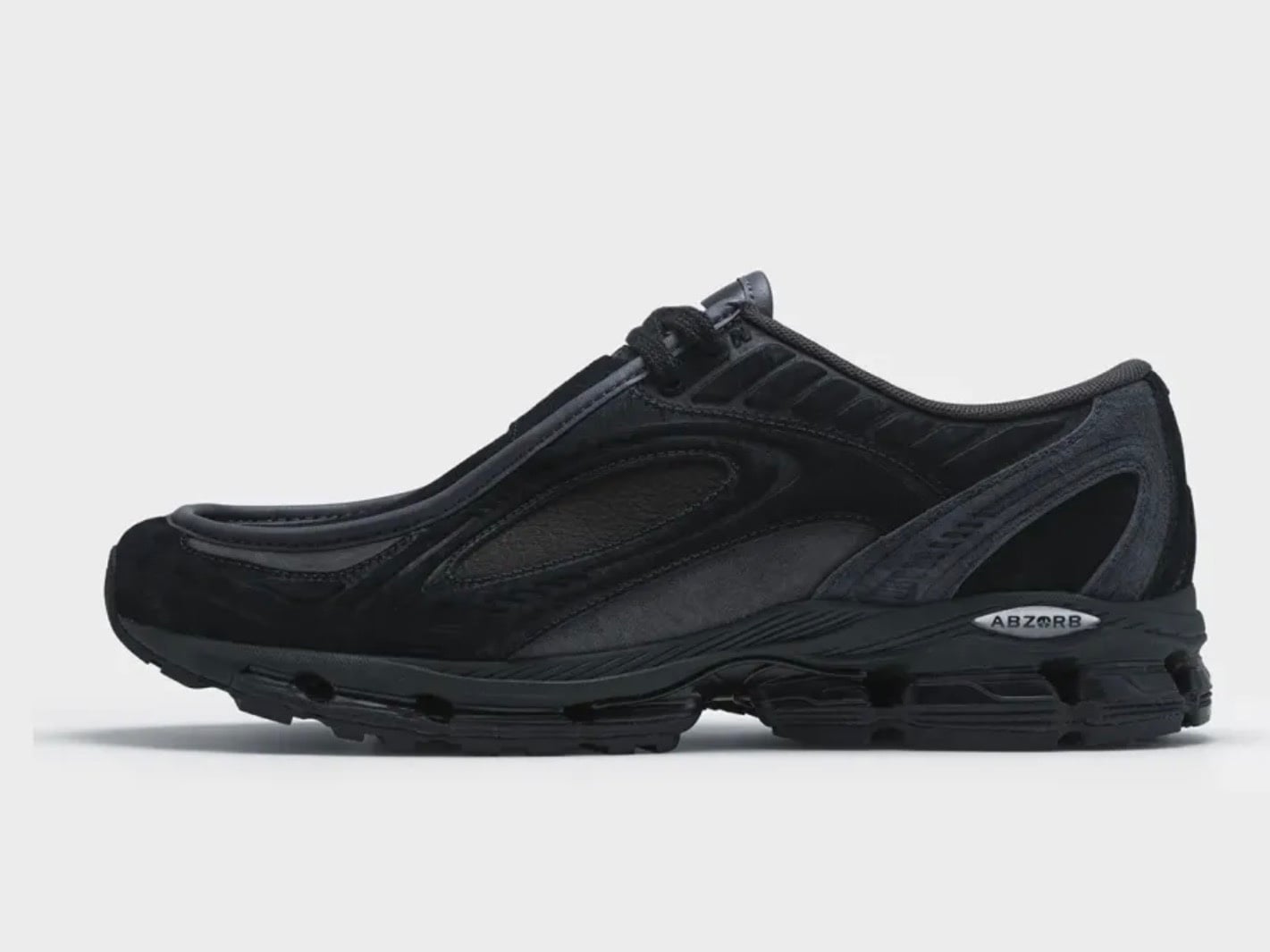
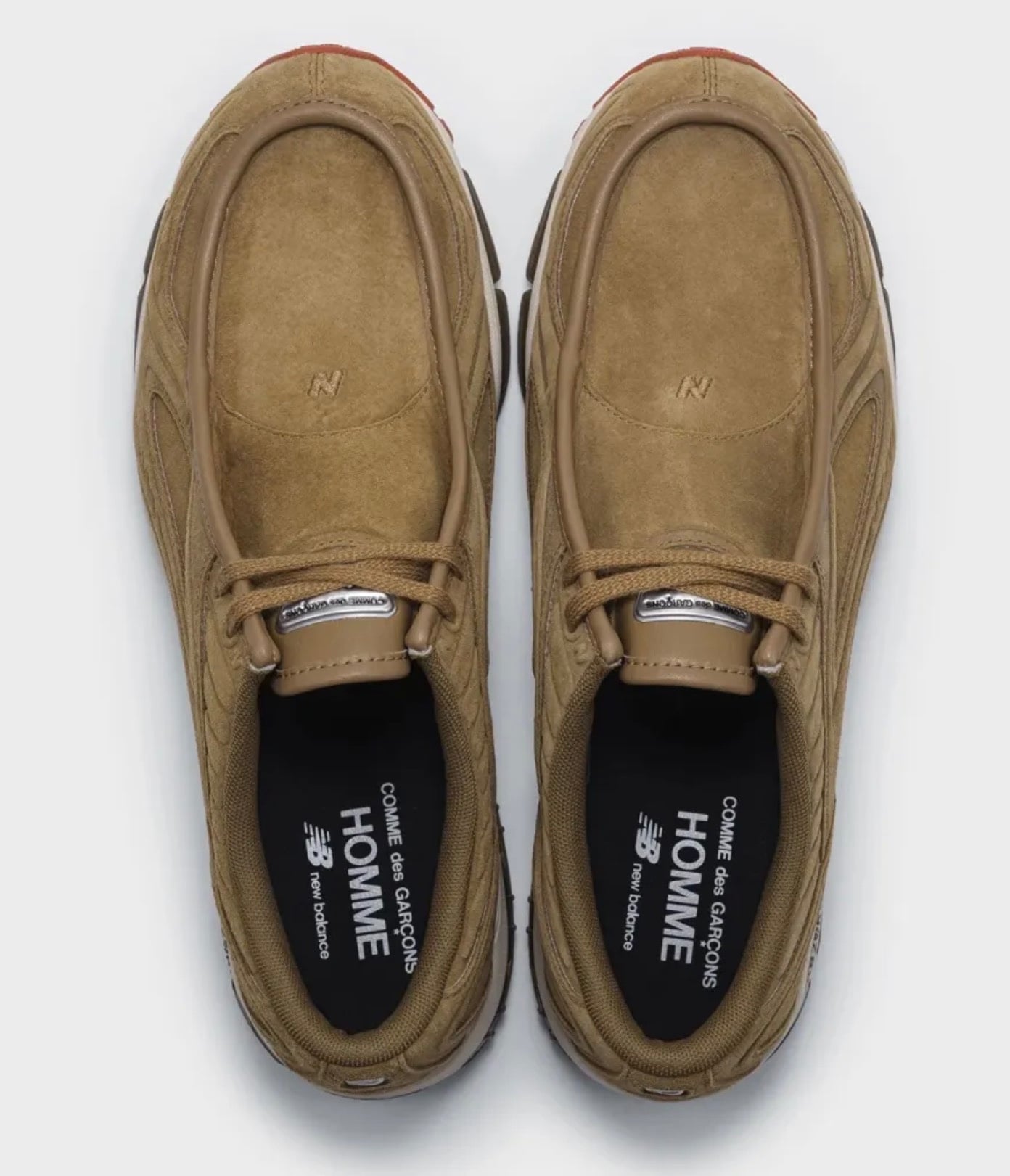
The key move is an apron construction. A single, clean section wraps around the forefoot, borrowing from traditional moc-toe footwear. The area of a running shoe that normally carries the most visible technical detailing becomes a smooth surface. That changes the proportions of the whole sneaker, and with them its character. The shape reads as a little more formal and more streamlined, and the upper holds together as one visual idea instead of a collection of parts.
The reference is deliberate. The apron links the sneaker to the tailoring and workwear that run through the Homme wardrobe. Moc-toe shoes are old, familiar work footwear, and here that vocabulary is placed on a contemporary running shoe. The structure of New Balance’s original design is still recognisable underneath.
What stayed the same
This is a collaboration where the label did restraint, and the engineering stayed with New Balance. The 1890A keeps an ABZORB midsole, the cushioning that absorbs shock during movement and supports everyday comfort. New Balance has also added structure around the rear of the shoe to improve stability with each step. Together, the two details are meant to support the foot over long stretches of wear.
So the division of labour is clear. Comme des Garçons Homme designs the surface, and New Balance’s technical architecture stays as it was. The result is a pair that can sit in a wardrobe built around tailoring without giving up the cushioning that makes a running shoe worth wearing for a full day.
It’s also a neat demonstration of how a focused edit can change a silhouette’s relationship with different kinds of wardrobes. Altering only the forefoot is a small intervention, and it still points the shoe somewhere new.
The pairs, and why people will want them
There are two colourways: the “Black” in Black/Charcoal, and the “Beige” in Beige/Orange. The release date is November 6, and Comme des Garçons is listed as the place to buy.
On collectibility, the case rests on the design and on the label that made it. Comme des Garçons has a reputation for turning everyday clothing into something worth studying, and this shoe is built the same way. It has a single, legible idea (the moc-toe apron), applied to a model with real technical credentials. It also has a runway origin. These pairs were seen at Paris Men’s Fashion Week before they ever reached a shelf, so the people buying them are getting something that started as a statement in a menswear show.
For readers who follow Japanese design closely, that’s the appeal. Rei Kawakubo’s house built a name on taking familiar garments and nudging them until they feel slightly new. The 1890A applies that habit to footwear: it keeps the shoe’s engineering and changes how it looks. A more polished, work-boot-adjacent upper on a cushioned running sole is an easy pairing to wear and a hard one to confuse with anything else on the shelf.
The two colourways also pull in different directions. Black and charcoal is the obvious match for the tailoring side of the story, and beige with orange shows a bit more personality. Which suits you depends on how loudly you want the apron to read.
Both go on sale November 6 through Comme des Garçons.
Via DSCENE