By Leo Corado
The Royal Albert Hall has a gift for taking films people know by heart and making them feel brand new. On December 30, the room gives that treatment to Casino Royale, the picture that introduced Daniel Craig as James Bond two decades ago. David Arnold’s score will be performed by the Royal Philharmonic Concert Orchestra under Anthony Gabriele while the film plays on the screen behind them, across two performances in a single day.
It is a lovely piece of programming. The film is named after a casino, its finest stretch takes place at a card table, and Arnold wrote music that treats a hand of poker with all the grandeur of a chase across a rooftop.
Craig’s Debut Built Its Whole Heart Around Poker
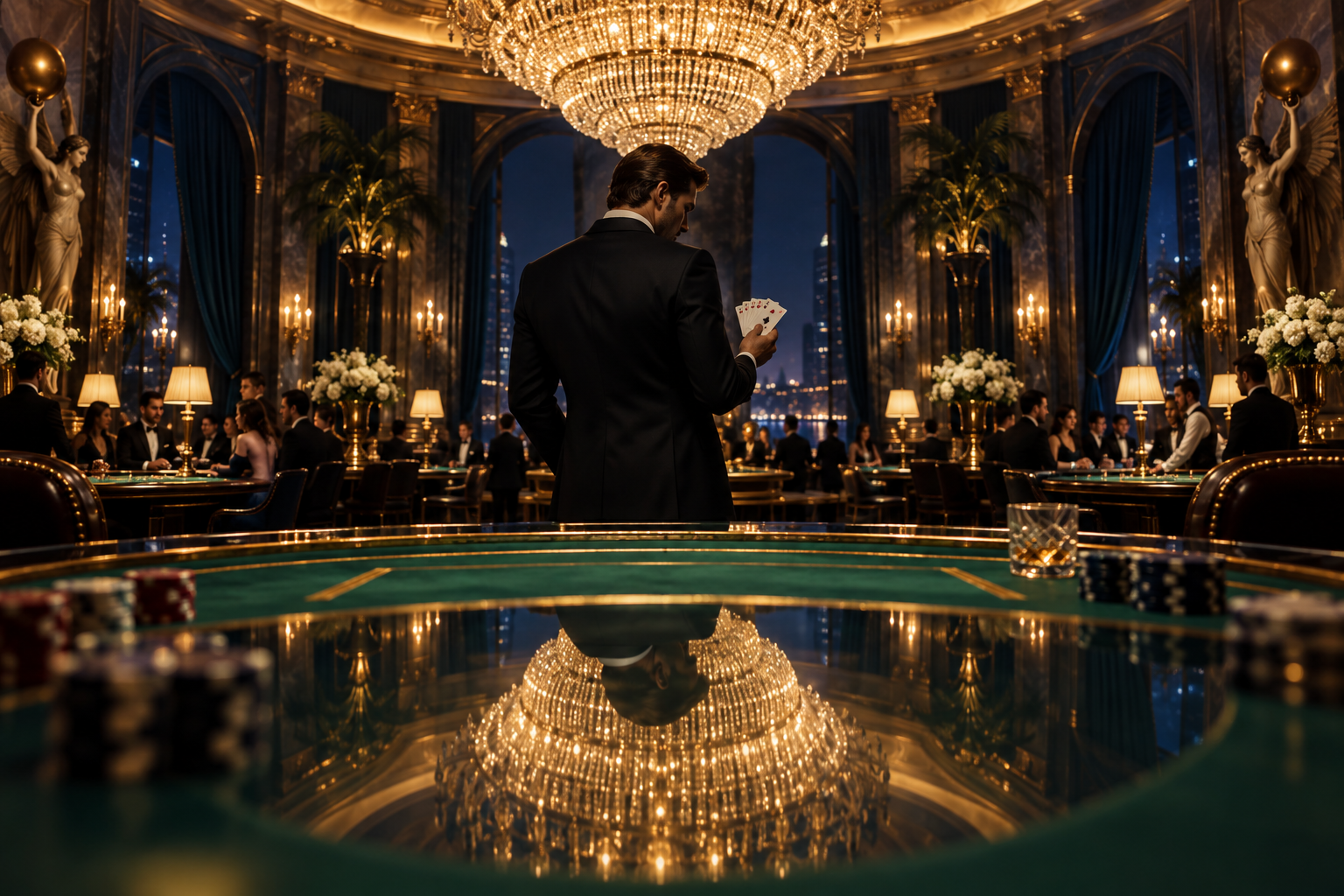
Le Chiffre’s tournament in Montenegro is the best sustained sequence in the Craig era, and it is remarkable how much the film trusts the game itself to carry it. The blinds climb, the chips move, Mathis watches the room, Vesper reads the players better than Bond does, and the camera keeps finding the small tells that a good casino table is designed to expose. Very little of it is explained, and none of it needs to be.
What makes the sequence sing is that the production clearly enjoyed the material. By most accounts the hands were built to be playable rather than dramatic nonsense, which is why poker fans still pause on that final board. Baccarat carried the game in Fleming’s novel, and swapping in poker gave the film something the older version never had, a game where the pleasure is in reading people rather than waiting on the shoe.
Le Chiffre’s tournament has spent twenty years making people want to sit down at a table themselves, without needing a tuxedo, a fictional villain or a casino in Montenegro. Britain’s licensed casino sites carry the poker, blackjack and baccarat that made the sequence sing, minus the poisoned martini.
Bond Has Always Been at His Best in Casinos
Casinos have given this franchise some of its warmest moments since the very beginning. Sean Connery introduced himself at a chemin de fer table in Dr. No, one of the great entrances in popular cinema, and the series kept returning happily to that furniture through the Moore and Brosnan years. The table scenes still get quoted long before the chases do, which is exactly why Casino Royale keeps returning to the Royal Albert Hall rather than making way for something newer.
The appeal is easy to understand. A casino gives a spy film a room where the danger is elegant and everybody stays seated, where a villain can be beaten without a single punch, and where the hero gets to be charming rather than merely capable. Thunderball, GoldenEye and Casino Royale all reach for that trick, and it works every time. The house rules do half the storytelling, because a game with fixed odds and a fixed etiquette gives a screenwriter a shape to push against.
Fleming understood this long before the films did. He wrote his very first Bond novel around a card table, and he gave the character a casino for a home turf because it let a spy do his work in public while dressed beautifully. Every screen version since has been building on that one idea.
The Costume Department Gets Its Best Assignment At A Casino Table
Casino sequences also hand the costume and production teams their happiest assignment. Dinner jackets, Vesper’s deep purple gown, the choreography of a room where everyone has dressed to be looked at while pretending to look only at their cards. Much of the Montenegro glamour was built in the Czech Republic rather than at any real resort, which is a compliment to the designers rather than a knock on them.
That mix of style and spectacle is exactly why the film has aged so gracefully, and why an orchestral screening feels like the right way to mark it. The evening sits comfortably alongside fashion houses reviving their archives and score concerts filling concert halls worldwide, part of a British menswear moment where a good dinner jacket still does a lot of talking, and where the tailoring carries as much weight as the plot.
Casino Royale is also the film that made the modern Bond possible, and it did it by putting the character in a chair and letting him earn his win. Twenty years on, that choice still looks brave and it still pays off. The card table gave the series its best character study, and it did so with nothing more exotic than a deck, a stack of chips and two men who refuse to blink.
The film reaches its anniversary in November, and a full orchestra sees it out at the close of December, which is about as elegant a way to end a year as anyone could ask for. The best seat in the house will be the one nearest the brass, somewhere around the moment Le Chiffre starts to deal.