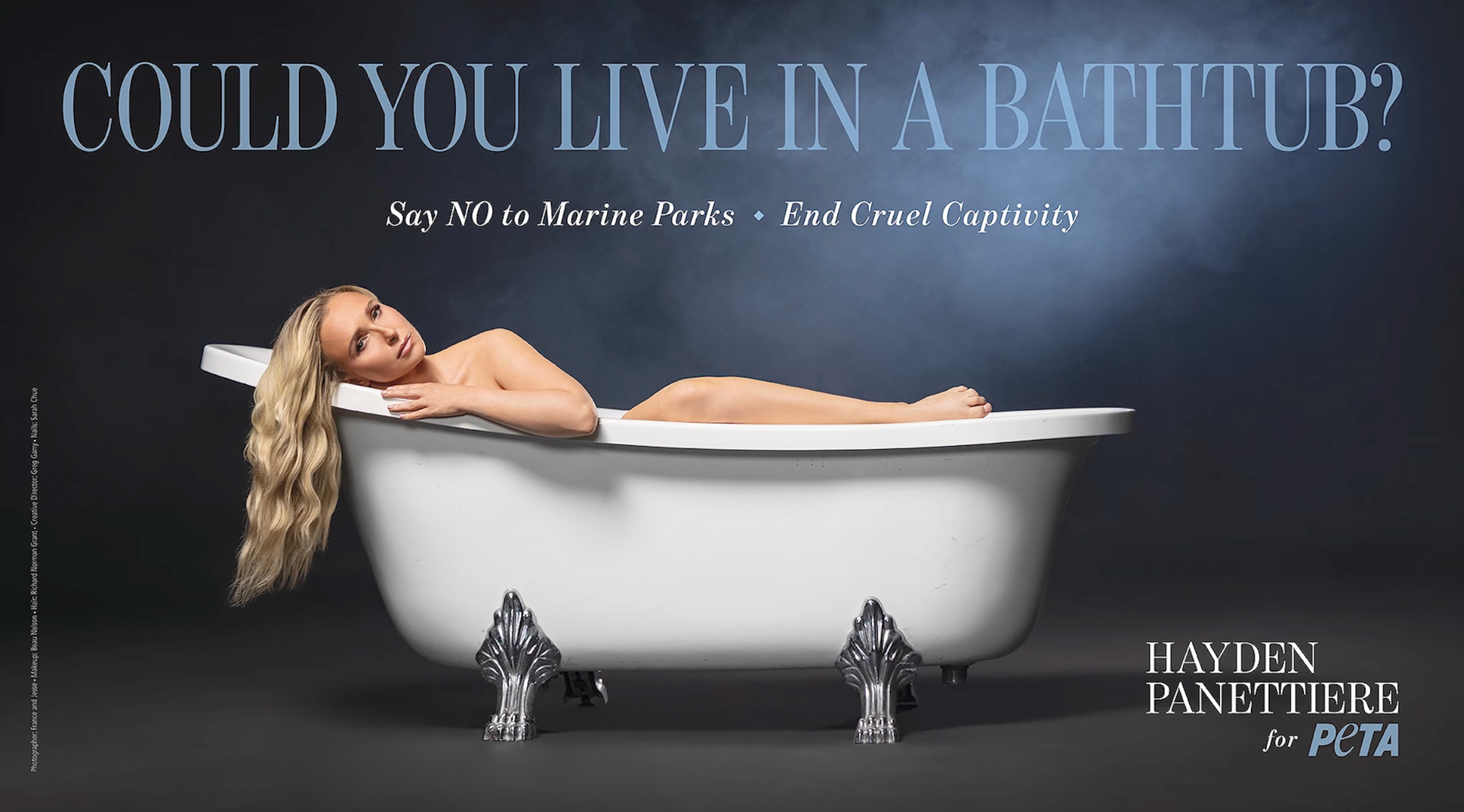
Hayden Panettiere died on August 17, 2026, at the age of 36, and in the days since, PETA has released what turned out to be her last public campaign: a video, filmed only weeks earlier, urging people to never support marine parks that keep dolphins in captivity. The spot is simple and pointed. Panettiere appears seated in a bathtub, a small, enclosed space standing in for the concrete tanks she was asking people to reject, before delivering the line herself: “Vow today to never go to a marine park that keeps dolphins in extreme captivity. Together, we can end this cruelty.” It is a small ask, staged in a way that makes the size of the confinement impossible to ignore, and it is entirely in character. For nearly two decades, Panettiere used whatever platform she had to speak for beings who could not speak for themselves, and this final message was simply the latest chapter of something she had been doing since she was barely out of her teens.
Her connection to marine life advocacy went back to 2007, when she traveled to Taiji, Japan, and put herself in the water to confront dolphin hunters directly, long before that fight had the visibility it has today. In the years that followed she continued showing up for causes most people never think about: opposing the import of wild beluga whales, appealing to world leaders on behalf of captive cetaceans, even pausing productions she was working on to make sure birds on set weren’t being harmed. It was never a passing interest. It was consistent, quiet, unglamorous work, carried out mostly without asking for credit.
What made that work feel especially personal, though, was everything Panettiere had also chosen to be open about in her own life, often at real cost to her. She spoke publicly about surviving an abusive relationship, about addiction and trauma, and about postpartum depression, and that last disclosure reportedly played a direct role in Neutrogena ending a partnership with her that had lasted nearly a decade. In a podcast interview earlier this year, she said the decision blindsided her. It is hard to sit with that quietly: a brand that spent years marketing itself around caring for women’s bodies apparently had no room for a woman being honest about what motherhood had done to her mind. That kind of honesty tends to leave people with a very specific kind of empathy, an understanding of what it feels like to be unheard, unable to advocate for yourself, or punished for being truthful about pain. It isn’t hard to see the throughline between a woman who fought to give her own pain a voice and a woman who spent years insisting that a dolphin in a tank deserved one too.
That is, in the end, the throughline of her whole public life: someone who, even in a project completed just weeks before her death, was still thinking about who else needed someone to speak up for them. It is a small, quiet way to be remembered, and maybe the truest one. Not for a single role or a single headline, but for the consistency of showing up, again and again, for whoever couldn’t show up for themselves.