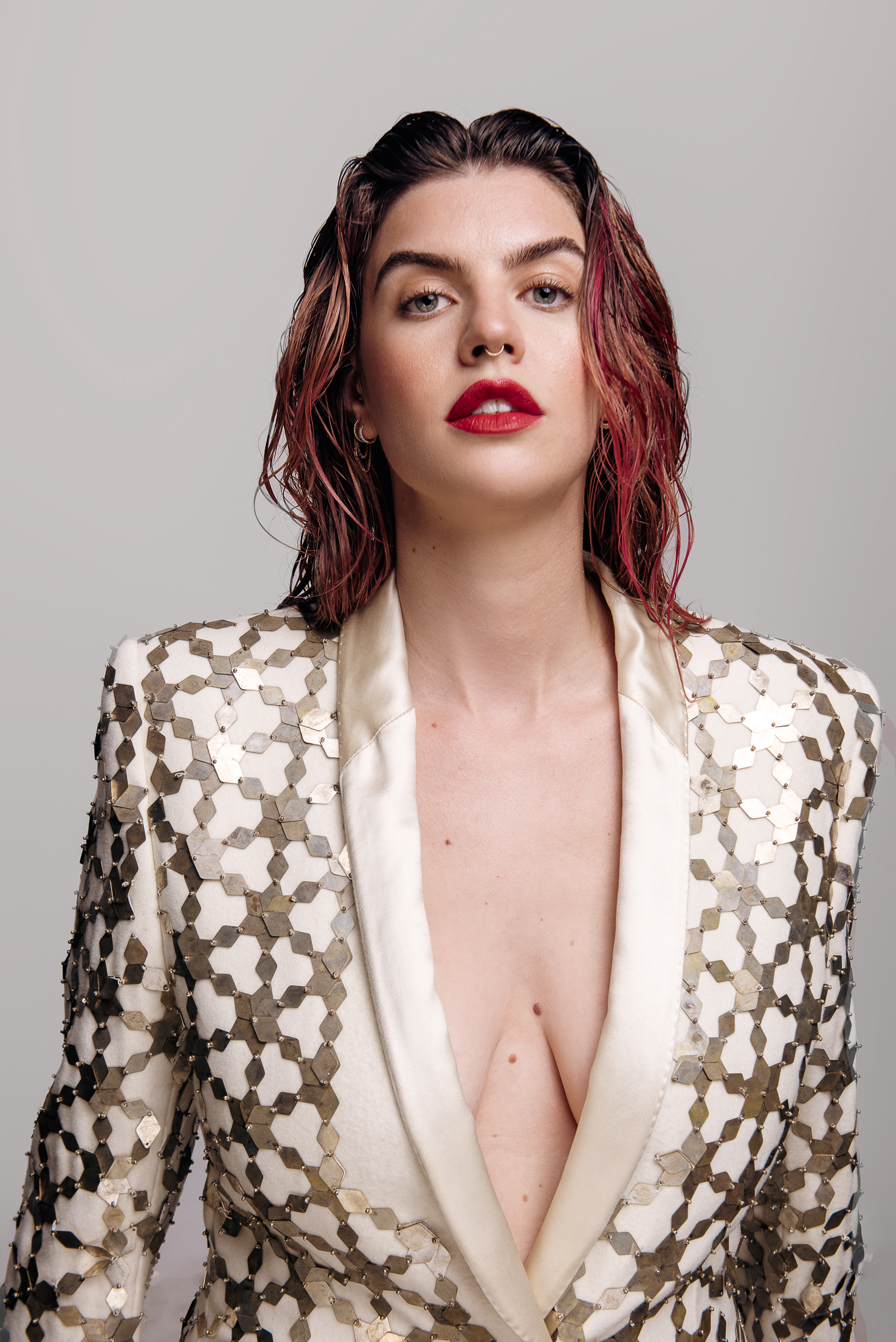
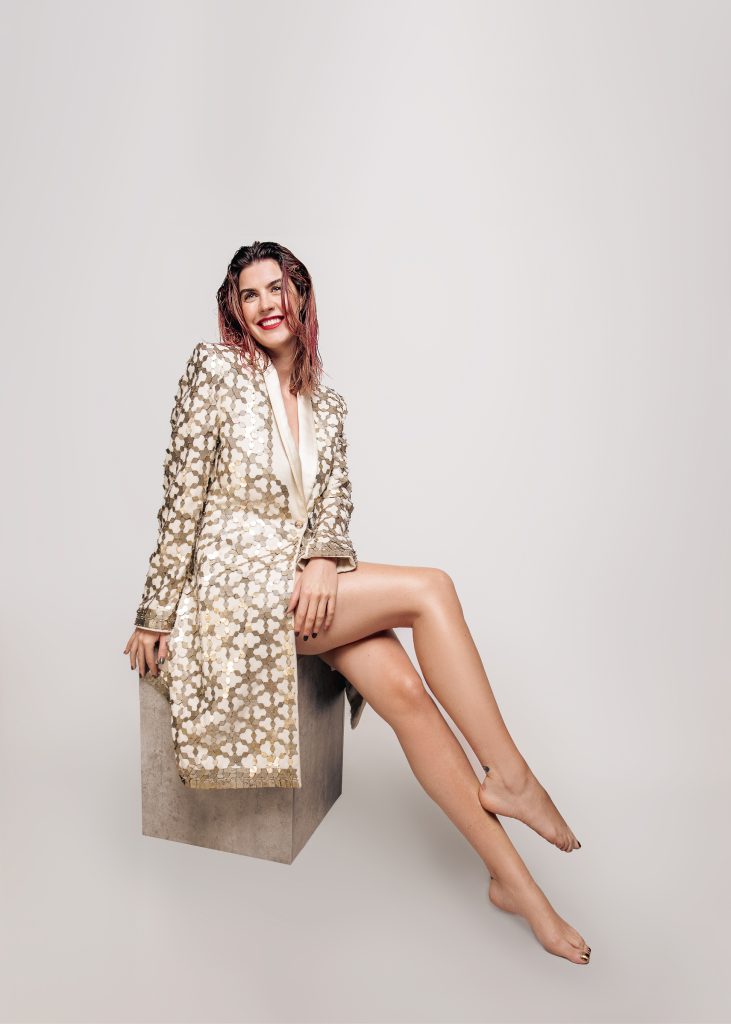
If you’re paying attention, you already know Elissa Freiha is shaping the conversation. As the Emirati-Lebanese-American founder of Womena, she’s built one of the most compelling media platforms coming out of the Middle East, one that centers voices often left out of the global narrative. At the intersection of culture, identity, and storytelling, her work feels both deeply personal and globally relevant. BELLO caught up with Freiha to talk about building with intention, redefining visibility, and why the stories we hear (and don’t hear) matter more than ever.
BELLO: You’ve built a platform that amplifies voices often left out of the global conversation. Was there a specific moment when you realized, this is the work I need to be doing?
EF: Yes! There was a series of events that came together to give me this realization but one clear validating moment came when I was speaking at MIT; a student volunteer told me that she was there from Amman, Jordan and had it not been for our docuseries ‘Womentum’, about Women tech entrepreneurs across the region, that her family would have never allowed for a girl to move abroad for university, even if it was one of the finest tech institutions in the world. It was that moment where I realized the true impact of our storytelling and of showing the world who we are today as a community. I have since received countless testimonials like this and we at Womena can say confidently that our content changes lives for the better. This is what I am meant to be doing.
BELLO: Womena doesn’t just tell stories, it shifts who gets to be seen and heard. How do you define power today, especially as a woman building in spaces that weren’t traditionally designed for you?
EF: Power is paradoxical. Most power today is concentrated and gate kept. Yet It’s also inherent in all of us. We all have power(s), we just need to learn to feel and express it. We have never been more able to harness our power whether through access to information, technology, and borderless connection to communities with shared experiences. Yet we *feel* more disempowered than ever. As a feminist woman under patriarchy, I find power in the in-between; in the space betwixt the binaries and boxes the algorithms and politicians want to put us in. I find power in creation, in presence, and human connection.
BELLO: You exist between cultures, Emirati, Lebanese, American. How has that shaped the way you see identity, belonging, and the stories that deserve a global stage?
EF: Growing up as a Third Culture Kid, not quite belonging anywhere, not having a fixed identity handed to me to rely on, was something I found quite frustrating at first. I wished for a simpler roadmap for me to follow. Fortunately, there was no roadmap and I got to define myself for myself from scratch. I see these cultures as merely labels, suggesting frameworks and ideologies more than forcing them. There’s a lot to learn from other cultures and ways of thinking, and when you grow up in between them you see that some suit you better than others. It means you never hold just one truth, you’re not close minded and believe that your perception is the objective reality. You hold multiple truths and can adapt in any context. I always belong to myself always; and only sometimes do I belong to anything else, and even then never fully. With nationalism on the rise and people reducing their identities to their singular country and that countries’ limited culture, I believe that the world can only benefit from relating and humanizing and connecting to The Other. I truly believe my messy heritage is a superpower of bridge building.
BELLO: Right now, the world is watching the Middle East through headlines. What do you feel those headlines are missing when it comes to the lived experience of women?
EF: I believe those headlines miss context, nuance or ANY SINGLE MENTION or acknowledgment of women’s actual experiences. I challenge any of your readers (or staff) to find me a single headline that centers a regional female voice that isn’t a soundbite fitting a wider narrative of good guys/bad guys that’s being pushed by the publication or the politicians. I dare you.
BELLO: As a founder, how do you balance being emotionally connected to the stories you amplify while also leading with clarity and intention?
EF: As a founder I have to admit that at this point my team is autonomous. Most of the stories we feature are chosen and managed by our incredible editorial team. They know the best medium through which to tell each story, we have set themes and productions for the year, and some wiggle room to play as well, and since they are all a part of the community we feature, they can all feel what *is* authentic and what isn’t. Gratefully, I can then take the distance that’s needed and focus on having a clear vision for the platform’s growth. As a citizen, I have to compartmentalize like an absolute champion in order to feel the hope that comes across in our content but still hold the pain actively being inflicted on our people.
BELLO: There’s a lot of conversation around “representation,” but your work goes deeper than that. What does true visibility actually look like to you?
EF: Thank you for saying that. Ironically, representation is really only the starting point. It’s the first step in humanizing and normalizing an Other. Representation is just a shadow of something new that is being presented. True visibility comes from seeing beyond the shadow, beyond the object casting the shadow even, and right into the soul of the thing itself. That’s what I want, I want us as a community to be VISIBLE, and undeniable. See us, hear us. Don’t just hear *of* us, or see our shadow.
BELLO: You’ve supported and elevated so many women over the years, what’s something about women in the region that you wish the world understood more clearly?
EF: I wish the world saw the deep, profound and intoxicating strength of the women of our community. I wish they understood their agency much more and their ability to create and build in spite of a billion blows. I wish the world could see the beautiful delicate and unwavering resilience they live with every day.
BELLO: In a digital world that often rewards noise over nuance, how do you stay committed to depth, honesty, and meaningful storytelling?
EF: Girl, THAT is the question. Firstly, I have to acknowledge that we have the immense privilege of being privately funded, this means we have to answer to absolutely no one. We get to choose which stories to tell and how. That’s not to say that we don’t struggle with staying steadfast in our values, we do, more often then I’d like to admit, especially when sponsorship and revenue is on the line, but we always come back to our core morals and values and they guide us, not the golden carrot being dangled in front of us. We talk about what we feel the world needs to hear, and we take up all the space we can to do so.
BELLO: What does modern feminism look like to you right now, and how does it differ from what’s often portrayed in Western media?
EF: Modern feminism is intersectional and it’s nuanced. It’s also going through a sort of rebrand and I am seeing a lot of educated and inquisitive dialogue around how to make Feminism work for everyone. Western feminists are actively untangling the myths they were fed when Patriarchy co-opted the movement in the second half of the 20th century. They’re struggling with failing ‘Lean In’ strategies, a reversal of rights that were thought to be gained, and the abhorrent inaction of institutions in the face of violence against women they are supposed to Protect. Simultaneously feminists in the rest of the world, and my region in particular are getting louder and better at sharing their legacies of feminist thoughts and movements which were silenced or forgotten over time. All of this brings me back to one point, connection and community, both of which are at the core of Matriarchy and both will hopefully lead us to a more unified approach for women’s advancement in society.
BELLO: On a more personal note, when everything feels heavy or uncertain, where do you find grounding, inspiration, or even hope?
EF: Touching grass. I know it’s said as a joke these days, but I live near nature and when it all gets too much i throw my phone behind the couch cushion and just disconnect from the world out « there », a world I’m digitally connecting to that’s burning and violent, and I go touch grass, walk in nature, pick some pretty flowers, look for cool rocks, listen to the birds chirping, and I think « if it all burns and we perish, at least nature will recover and keep being beautiful » and for some reason, that comforts me to my core.
You can follow Elissa on IG at @Freiha and check out her podcast “Sage Takes Thyme” at https://sagetakesthyme.komi.io/