
By Mashum Mollah
What to Pack for a Weekend Away, Carry-On Only
The weekend away is the trip most people overpack for. It’s short enough that every eventuality seems worth covering and long enough that a change of outfit feels necessary, so the bag gets a full week’s clothing for two nights. The result is a case that has to be checked, a wait at the carousel, and a return trip with half the contents unworn. Packing carry-on only for a weekend isn’t a challenge. It’s just a different set of decisions, and once they’re made they hold for every trip after.
The Bag
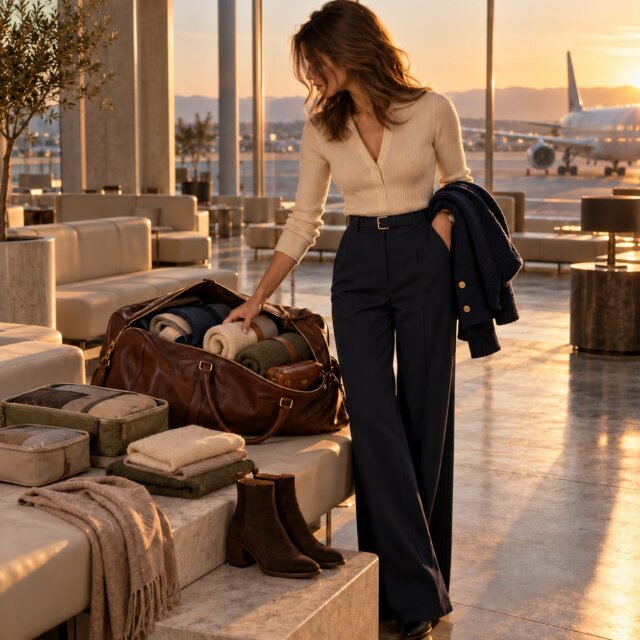
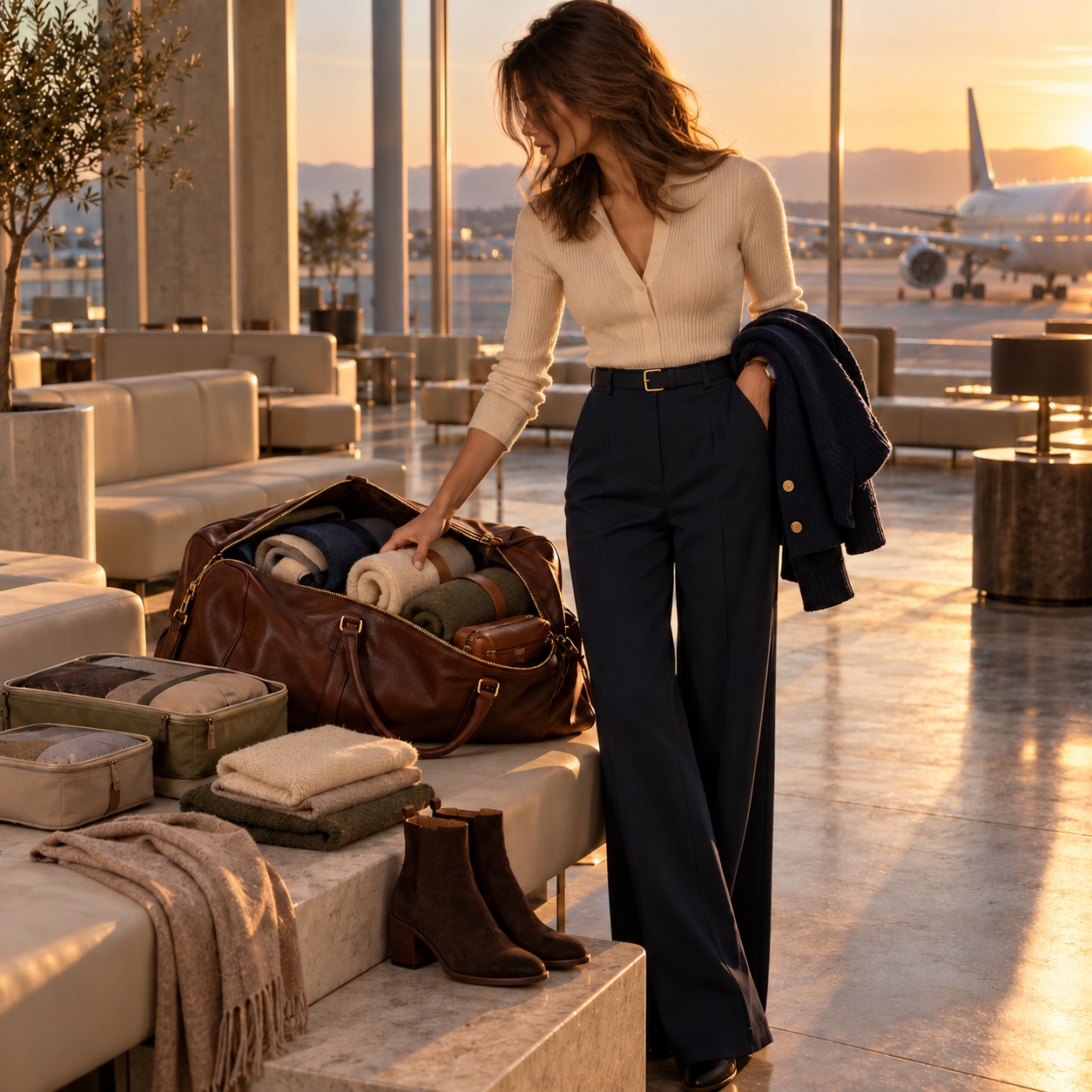
A soft holdall or a small case that fits under the seat or in the locker, depending on the airline’s rules, which are worth checking because they’ve tightened. A bag with one main compartment and one zipped pocket is easier to live out of than one with twelve sections. Packing cubes, two or three, keep the main compartment organised without adding weight.
The Arithmetic
Two nights means two days and two evenings, plus the travel. Count the actual occasions, not the possible ones. Travel day, day one, evening one, day two, evening two, travel home. That’s three daytime looks and two evenings, with a great deal of overlap between them. Anything beyond that’s insurance, and insurance is what gets checked into the hold.
What Goes In
One pair of trousers or a skirt, worn on the journey, that works for the day and can pass for the evening with a different top. One pair of something else, jeans or a dress, for day two. Three tops, one of which is the travel top. One knit or jacket, worn on the plane. One outer layer if the weather demands it, also worn. Two sets of underwear plus what’s on. Socks. One pair of shoes worn and one packed, and the packed pair should be the lighter.
Nightwear. This is where weekend packing goes wrong in both directions: people either forget it entirely and sleep in a T-shirt, or pack a full set that takes a quarter of the bag. A lightweight set in a fabric that squashes flat, modal or fine cotton, takes almost no room and is worth its place, because a hotel bed is more pleasant in something chosen than in something improvised. The soft wardrobe essentials that were bought for evenings at home are often exactly the thing, since the same top that’s worn on the sofa doubles as sleepwear and, in a pinch, as the layer for breakfast in the hotel room.
Toiletries in a clear bag, under 100ml each, and only the ones that’ll be used. The hotel has soap. Chargers, in the zipped pocket. A book or a device. A small bag for the day.
What Stays Home
The second pair of jeans. The third pair of shoes. The just-in-case dress. The full-size shampoo. The umbrella, unless the forecast is certain. The hairdryer, which every hotel has. The laptop, unless the trip is for work. Anything that’s packed “in case it gets cold” when the forecast says it won’t.
The rule is that every item should have a specific occasion attached to it. An item that’s “just in case” is an item that doesn’t go.
Wearing The Bulk
The heaviest and bulkiest things are worn, not packed: the jacket, the boots, the knit, the trousers with the most structure. On the plane they’re taken off and stowed; at the destination they’re the first day’s outfit. It’s the single biggest saving in carry-on packing, and it’s why the person at the gate in a coat and boots in September isn’t as strange as they look.
A small laundry bag, or a plastic bag, for the worn things, keeps the return trip organised. It’s the sort of detail that sounds fussy until the clean top is found wrapped around the used socks.
The Colour Rule
Everything packed should go with everything else. Two neutrals and one accent: navy and cream with a rust jumper, black and grey with a green top. Three tops that all work with both bottoms and both layers give more outfits than six that don’t. Pattern on one piece at most.
Jewellery goes in a small pouch, limited to what’ll be worn. A watch, one pair of earrings, one necklace. The rest stays in the drawer at home.
Rolling And Folding
Rolling soft things, knits and T-shirts, saves space and reduces creasing. Folding structured things, shirts and trousers, keeps them flat. Shoes go at the bottom in a bag, stuffed with socks. Toiletries go at the top so they come out at security without unpacking.
The Weekend That Includes An Occasion
A wedding, a dinner, a thing with a dress code changes the list slightly. The occasion outfit is packed flat on top and worn once. Everything else is cut back to compensate: two tops instead of three, one pair of shoes plus the occasion pair. The occasion shoes are the packed pair; the travel shoes are worn.
Key Takeaways
Carry-on for a weekend is three daytime looks and two evenings, mostly overlapping, in a tight colour palette, with the bulk worn on the journey. Pack nightwear that squashes flat, toiletries that’ll be used, and nothing that’s just in case. The bag stays under the seat, the carousel is skipped, and the trip starts at the airport door rather than twenty minutes after it.


