
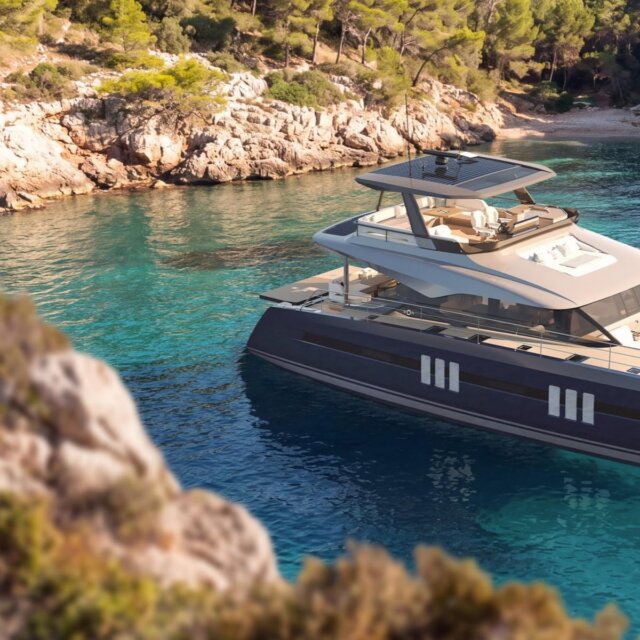
The British yard behind a round-the-world rally has unveiled the Oyster P60, its first power catamaran. It has a 3,500-mile range, a flybridge lounge and a tender garage.
Oyster Yachts has built its name on sails, and now it has launched a boat with two engines and a bar on the roof. The Oyster P60 power catamaran made its debut at the Fort Lauderdale International Boat Show. It is the British yard’s first power multihull, and it arrives only weeks after its first sailing cat.
That earlier boat, the Oyster C60, appeared at the Cannes Yachting Festival in September, when Oyster entered the sailing catamaran segment. Two catamarans in two months suggests the yard has decided multihulls are worth the commitment. It is doubling down, as Robb Report put it.
Built for the long way round
Oyster developed the P60 with Berret Racoupeau Yacht Design. The brief was the space and stability of a multihull combined with the cruising ability of an offshore yacht. CEO Stefan Zimmermann Zschocke described it as the first time Oyster’s bluewater philosophy has gone into “a purpose-designed luxury power catamaran.” He said the P60 is for owners who want “the freedom to undertake long powered passages and expeditions aboard a spacious, luxury catamaran imbued with the safety and engineering those ambitions demand.”
The numbers back that up. The target range is up to 3,500 nautical miles at 8 knots, or 1,000 nautical miles at 12 knots. That would be enough to cover the longest leg of Oyster’s famous World Rally. That leg is the 3,000-nautical-mile hop from the Galápagos to the Marquesas, part of a 27,000-nautical-mile circumnavigation.
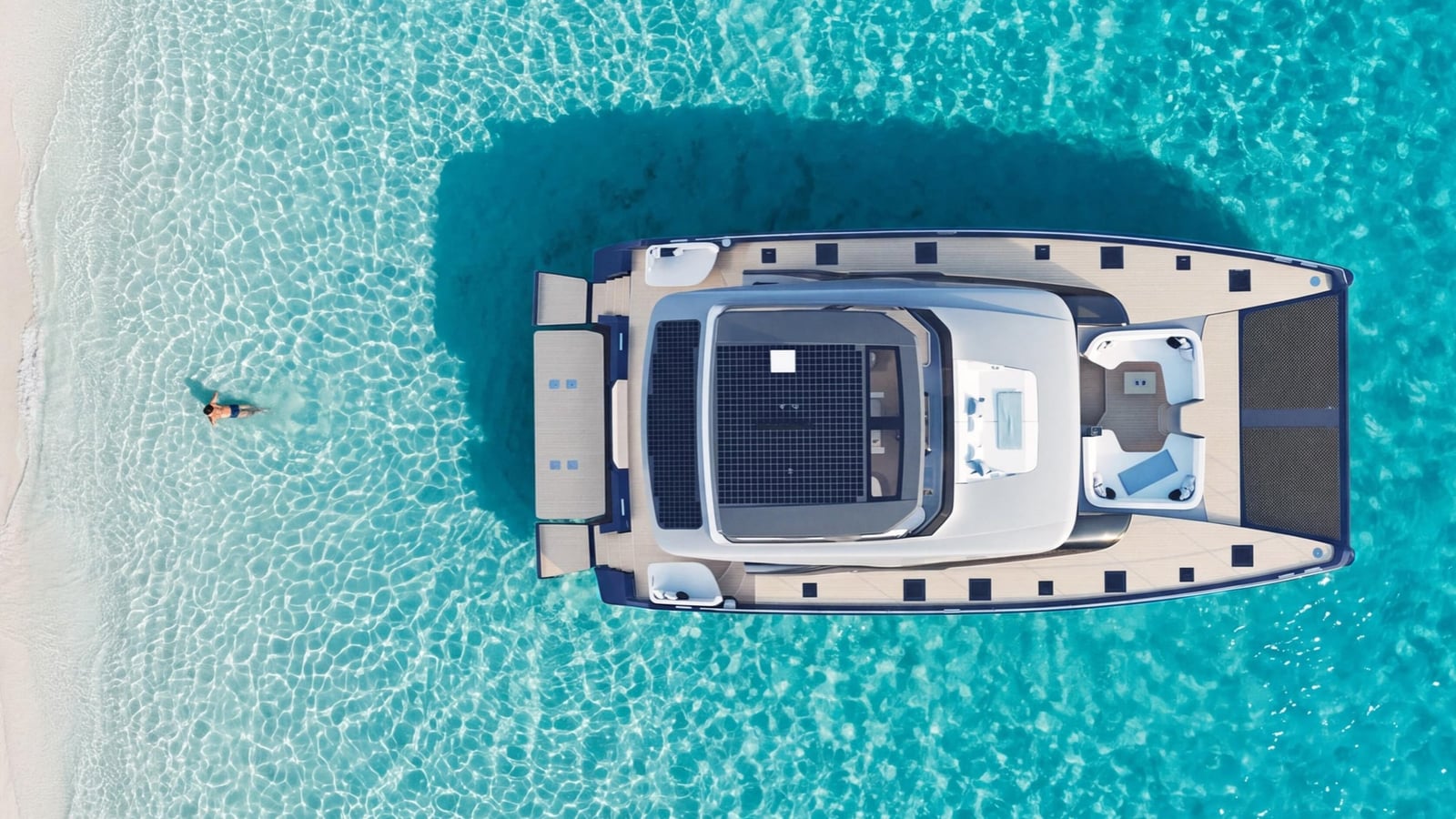
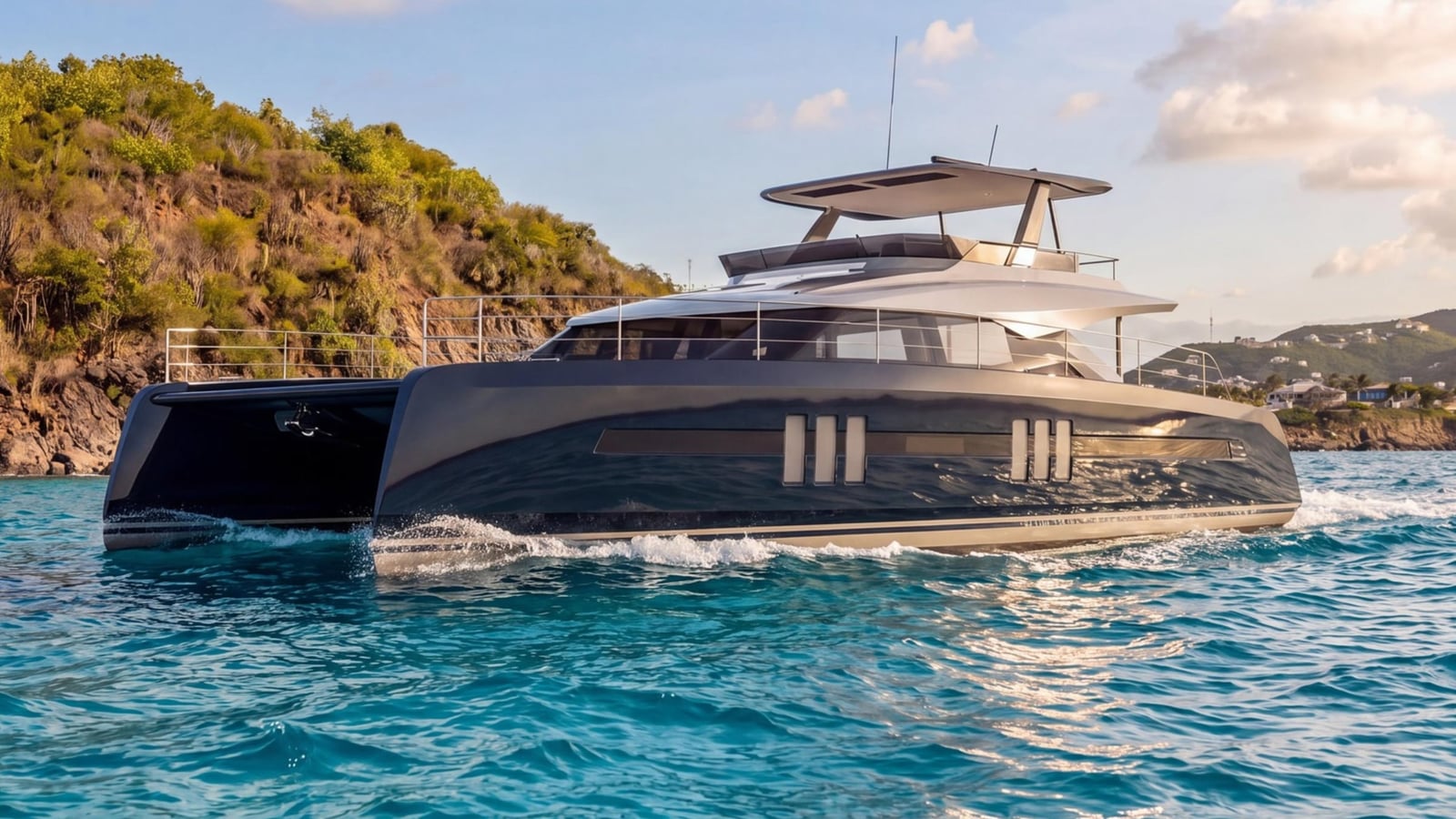
Two slender hulls, twin engines and two fuel tanks holding 1,585 gallons make the distance possible. Owners who want to cut emissions and noise can add rooftop solar panels and a lithium battery bank, which also increases autonomy. The boat measures just short of 64 feet.
Life on board
Crossing oceans on the P60 is meant to be comfortable. The boat has just over 1,302 square feet of living space, spread across the flybridge, aft cockpit, salon and forward cockpit. The salon is open and light-filled, and it sits at the center of the main deck. A galley can go there as an option, or on the lower deck.
The lower deck holds an owner’s suite with private access to the aft deck. It can also take two or three guest cabins, plus crew quarters. Refined materials, upscale furnishings and high-quality finishes give the interior a superyacht-like quality. In other words, the cabin should feel closer to a much larger yacht than a 64-foot catamaran usually does.
Outside, the aft cockpit does three jobs. It is an entertaining space, a sunbathing spot and a watersports area. Beside it, a hydraulic platform works as a swim platform and doubles as a tender garage. One piece of kit, two uses, and no dinghy cluttering the deck.
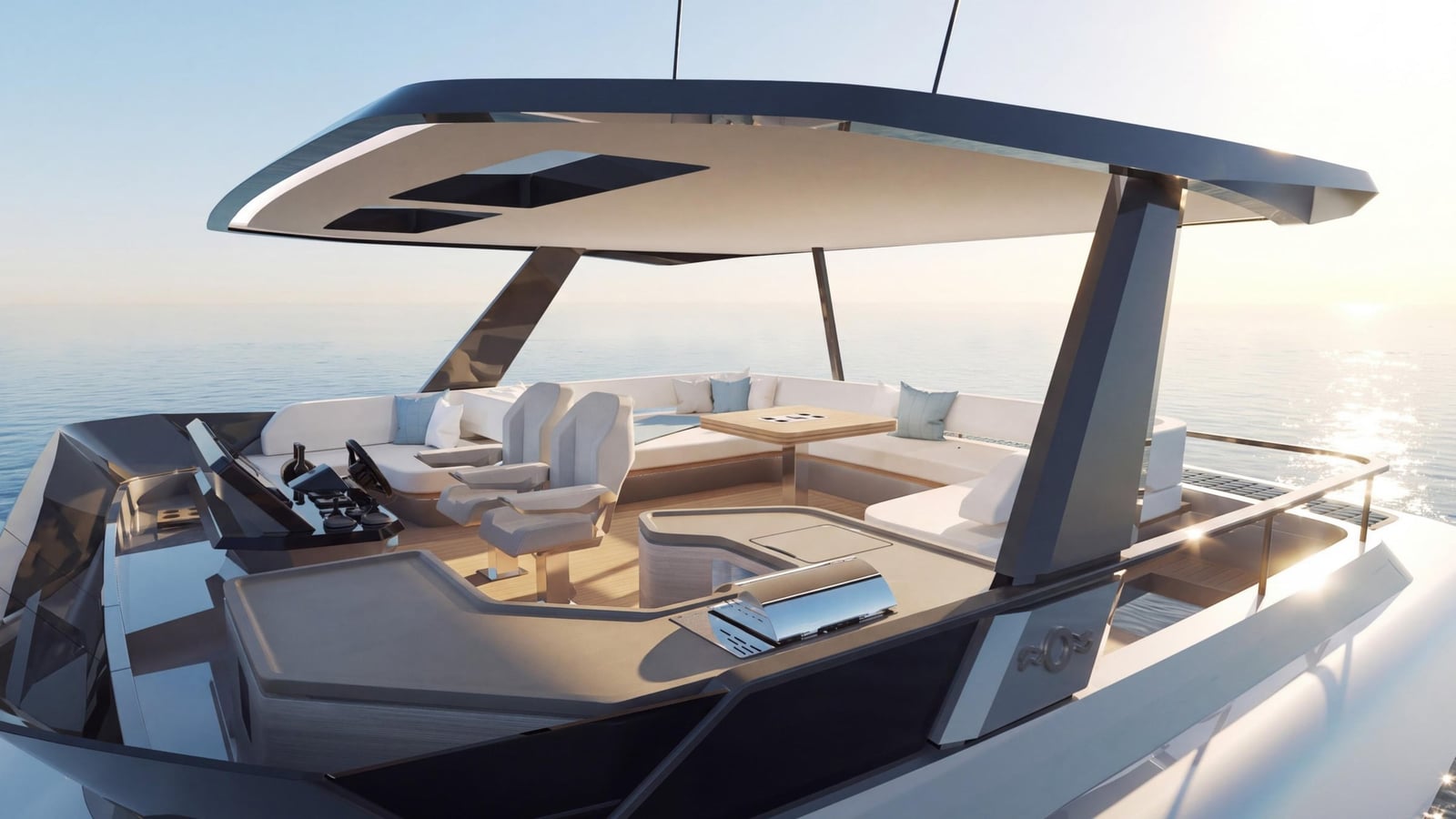
Up top, the flybridge has a single central helm, a bar, a lounge, a forward daybed and a hardtop. That is the sociable end of the boat, and it looks like where most evenings will end up. The helm sits in the middle, so whoever is driving stays part of the party.
Who it’s for
The P60 is designed to be run by an owner couple, with or without crew. Oyster says it will strongly appeal to the U.S. market. American owners, the yard says, tend to focus on fully equipped flybridges, water access, fishing and effortless cruising. The P60 covers most of that on its spec sheet, which may explain why it debuted in Fort Lauderdale.
For a yard known for sailors who cross oceans, the P60 is a change of propulsion more than a change of attitude. The long-range thinking and the engineering stay. What’s new is the daybed, the bar and a second engine.
Via Robb Report