
Courtesy of the artist; Lehmann Maupin, New York, Seoul, and London; Victoria Miro © Do Ho Suh
At the Museum of Modern and Contemporary Art in Seoul, the Korean artist transforms the homes of his past into translucent spaces, exploring what it means to carry a sense of home with us.
What if you could take your home with you wherever you went?
Not just the furniture or the photographs, but the hallway you walked through every morning, the door you opened a thousand times, the light fixture above you, even the electrical wiring hidden inside the walls.
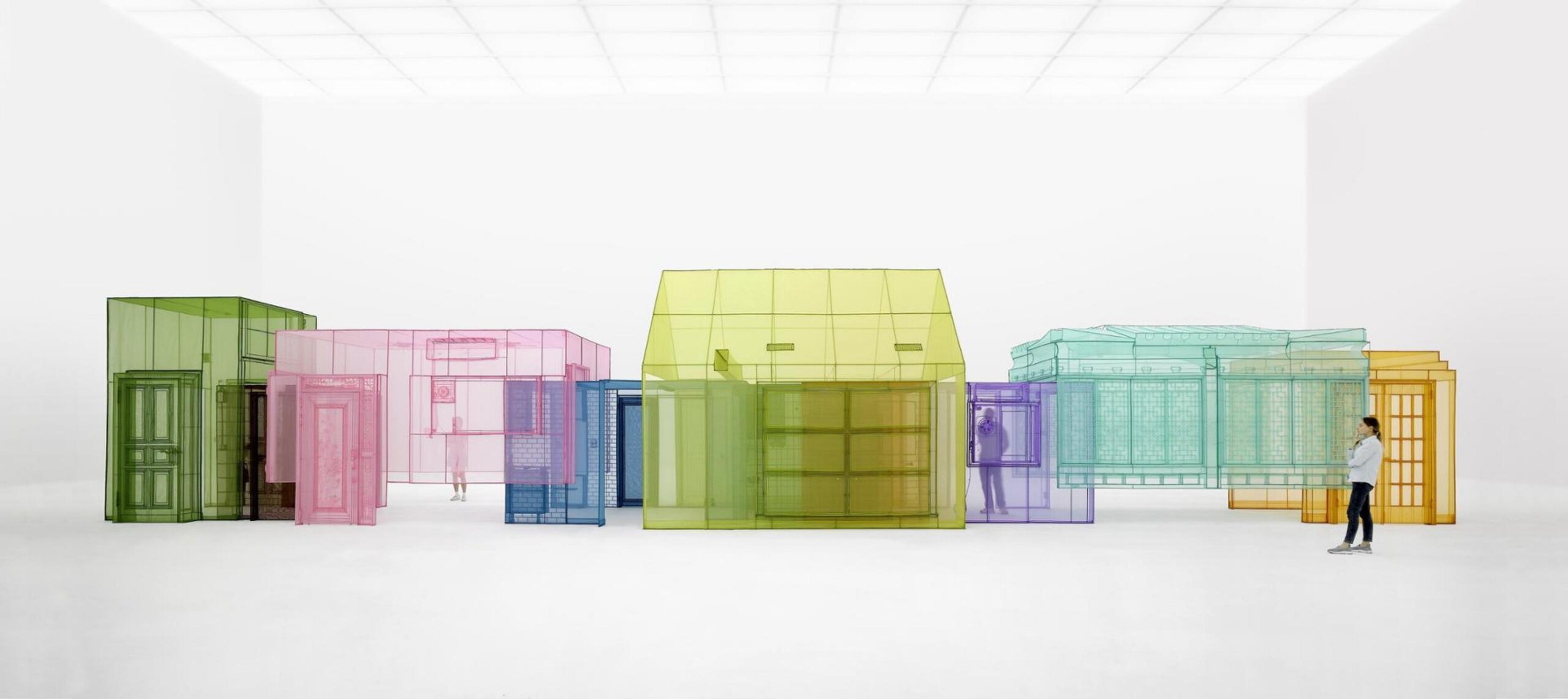
This is the emotional question behind Do Ho Suh’s Nests, a 2024 work presented at the Museum of Modern and Contemporary Art in Seoul. Created from fabric and thread, the installation brings together rooms from the different homes the Korean artist has lived in across continents and different stages of his life.
Instead of rebuilding these spaces in concrete, wood or plaster, Suh recreates them entirely in translucent polyester fabric.
The result is almost ghostly.
A Home Made of Fabric
Suh calls this approach “fabric architectures,” recreating familiar spaces at their original scale with an extraordinary level of precision.
A door handle becomes fabric. A light fixture becomes fabric. Even electrical wiring is reconstructed in delicate thread.
Walking through Nests feels less like entering an actual home and more like stepping inside a memory of one. The architecture is recognizable, but its transparency makes it feel distant, fragile and almost impossible to hold onto.
And that is precisely the point.
The work was inspired by Suh’s longing to somehow pack up his childhood home and take it with him. Nests imagines what that impossible gesture might look like.
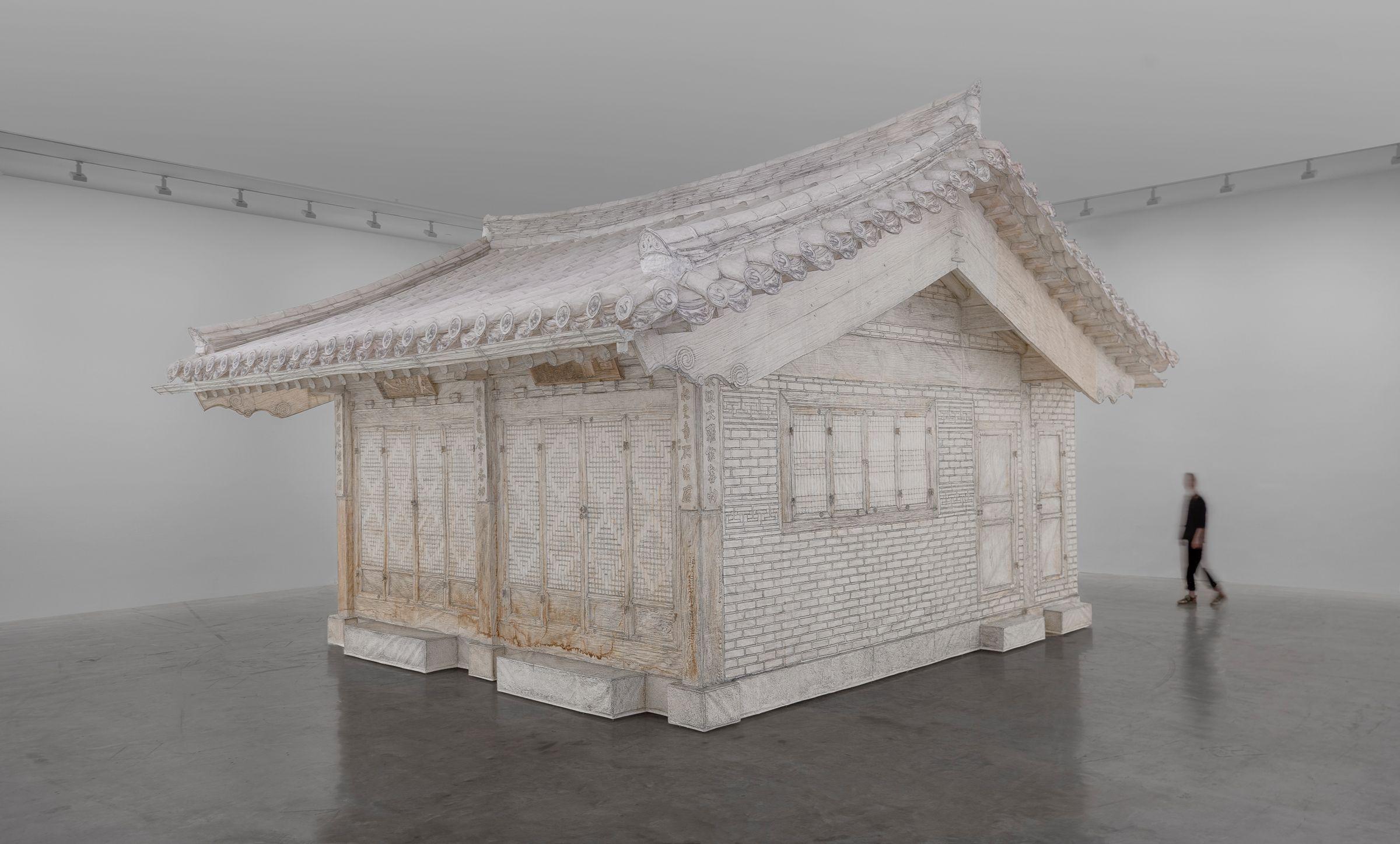
Many Homes, One Life
The title becomes especially meaningful when you think about the different spaces coming together.
Suh describes the homes in his life as different “nests.” Each one represents a particular place, period and version of himself. In Nests, those separate spaces overlap and converge, becoming one larger structure.
The installation suggests that home isn’t necessarily one location.
It can be several places at once.
A childhood bedroom can exist alongside an apartment on another continent. A hallway from one chapter of your life can overlap with the kitchen from another. The places may disappear from your everyday life, but they don’t necessarily disappear from you.
The Architecture of Memory
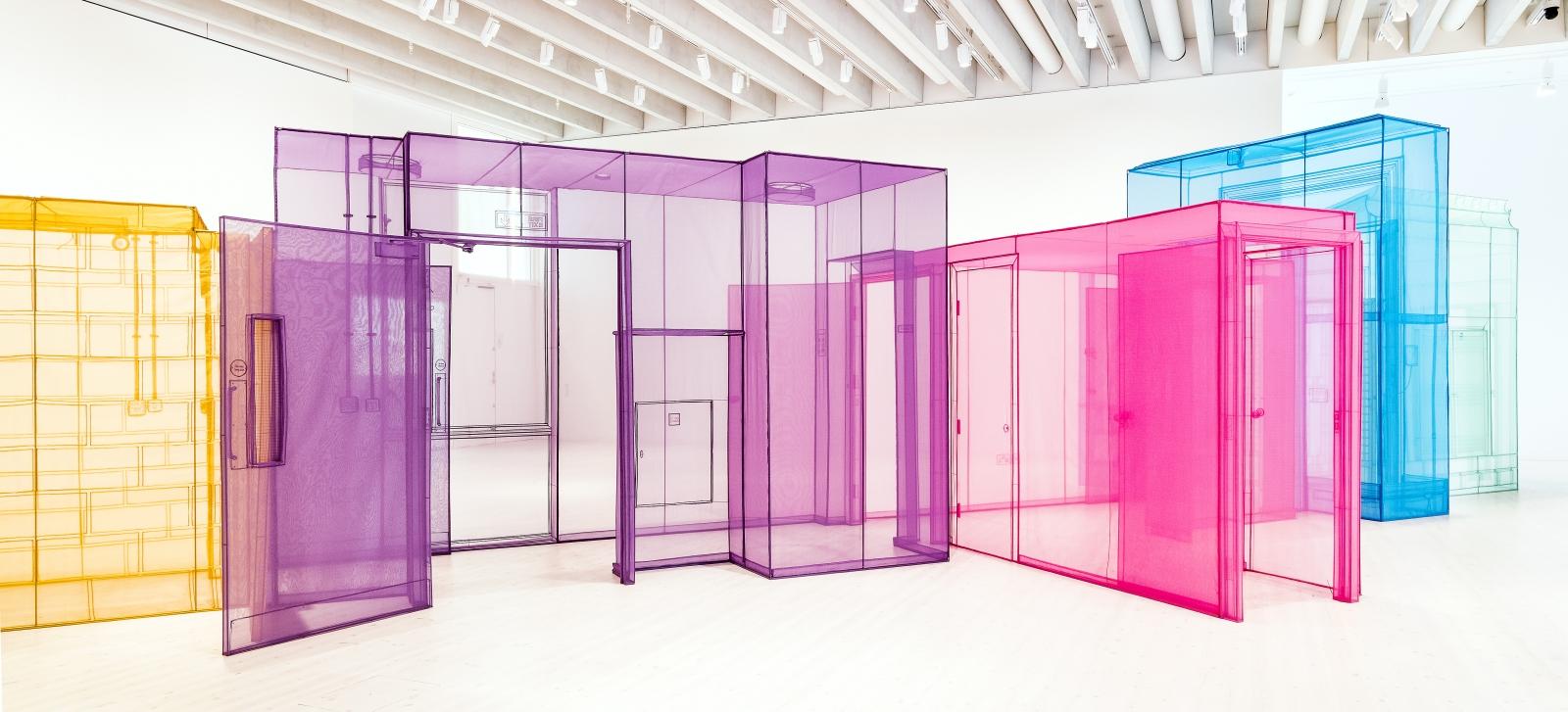
The translucent fabric gives Nests an almost dreamlike quality. The rooms are there, but they don’t feel completely solid. They appear and disappear depending on how you move around them.
That makes the work feel less like a reconstruction and more like the way memory actually works.
We rarely remember a home perfectly. We remember fragments. A particular window. The shape of a doorway. The light in the afternoon. The feeling of walking down a hallway.
Suh turns those fragments into architecture.
A Hallway Through Life
The shape of Nests also adds another layer to the work.
Its hallway-like structure evokes movement, suggesting a journey through the different places and phases that make up a life. As the rooms overlap, their colors and forms begin to merge.
You are essentially walking through the artist’s memories while also being reminded of your own.
Because even if we can’t physically pack up our childhood homes and bring them with us, we carry pieces of them everywhere we go.
That may be the most beautiful idea inside Nests: home isn’t always somewhere we can return to.
Sometimes, home is what we take with us.