
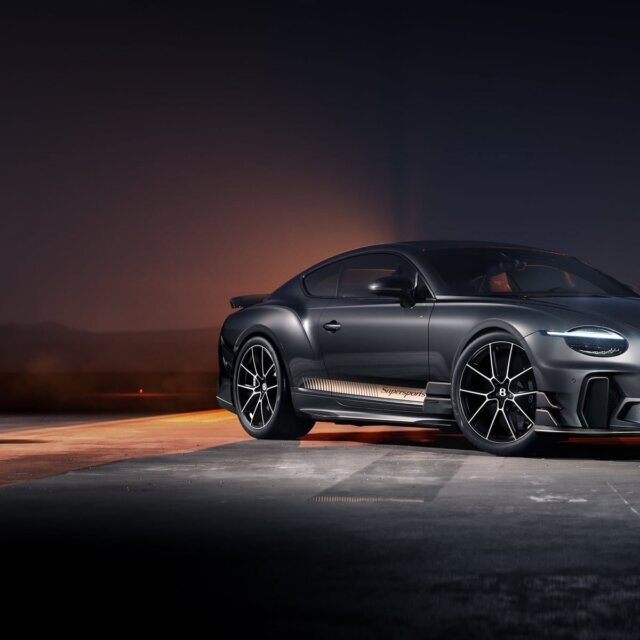
The 2027 Bentley Supersports starts at $486,200 and will be built 500 times. It's the only rear-drive Continental you can register for the road.
Bentley has built exactly one road-going Continental that sends its power only to the rear wheels, and it will make 500 of them. The Bentley Supersports starts at $486,200, and that combination of price, scarcity and a drivetrain quirk is the sort of thing collectors tend to circle in red pen.
Robb Report’s Viju Mathew drove it at WeatherTech Raceway Laguna Seca in Northern California. The day began with a passenger ride in a 1925 Bentley Super Sports, the marque’s first model to push a speedometer needle beyond 100 mph. Then came a helmet, and a walk across pit lane to its modern namesake. The two cars sat 50 yards apart. Mathew counted more than a century between them.
Fourth time lucky
The name doesn’t get used often. This is only the fourth car to wear Supersports, counting the 1925 original, which is a thin family tree for a badge that has had 100 years to multiply. Bentley has treated it as a rank to be earned rather than a trim level to be sold.
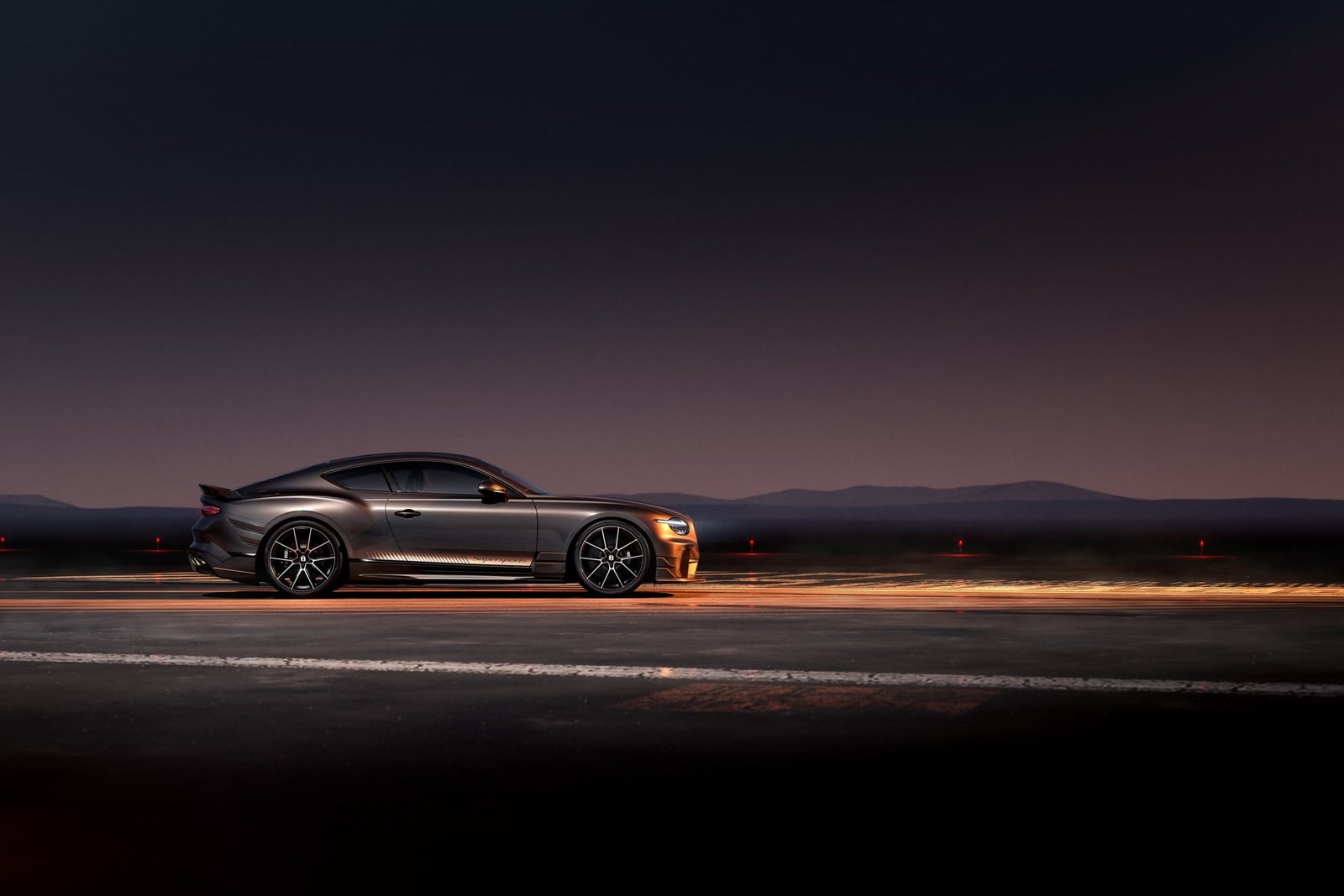
Unlike that first car, the new one is a Continental GT that has been both sharpened and stripped. The rear-passenger space is gone entirely. The roof is carbon fiber. The result weighs a touch over 4,409 pounds, and the only Bentley to come in under that figure was built in 1940. Mathew calls it the lightest Bentley since then, and the most balletic non-motorsport Bentley you’ll find.
Rear-drive, and proud of it
Under the bonnet sits a 4.0-liter twin-turbo V-8 with an eight-speed dual-clutch transmission, producing 657 hp and 590 lb-ft of torque. On paper that is less than the current hybrid GT makes. Bentley has clearly decided that horsepower isn’t the point here. Sending everything to the rear axle, and shedding weight while doing it, is a different argument, and one the company hasn’t made in a street-legal Continental before.
The performance figures are still serious: zero to 62 mph in 3.7 seconds and a top speed of 192 mph. Mathew noted that the main straight at Laguna Seca arrived faster than the car could reach that top speed, which is a polite way of saying the brakes get plenty of work. They are enormous carbon-silicon-carbide discs behind 22-inch aluminum-alloy wheels. The test car wore Pirelli Trofeo RS tires.
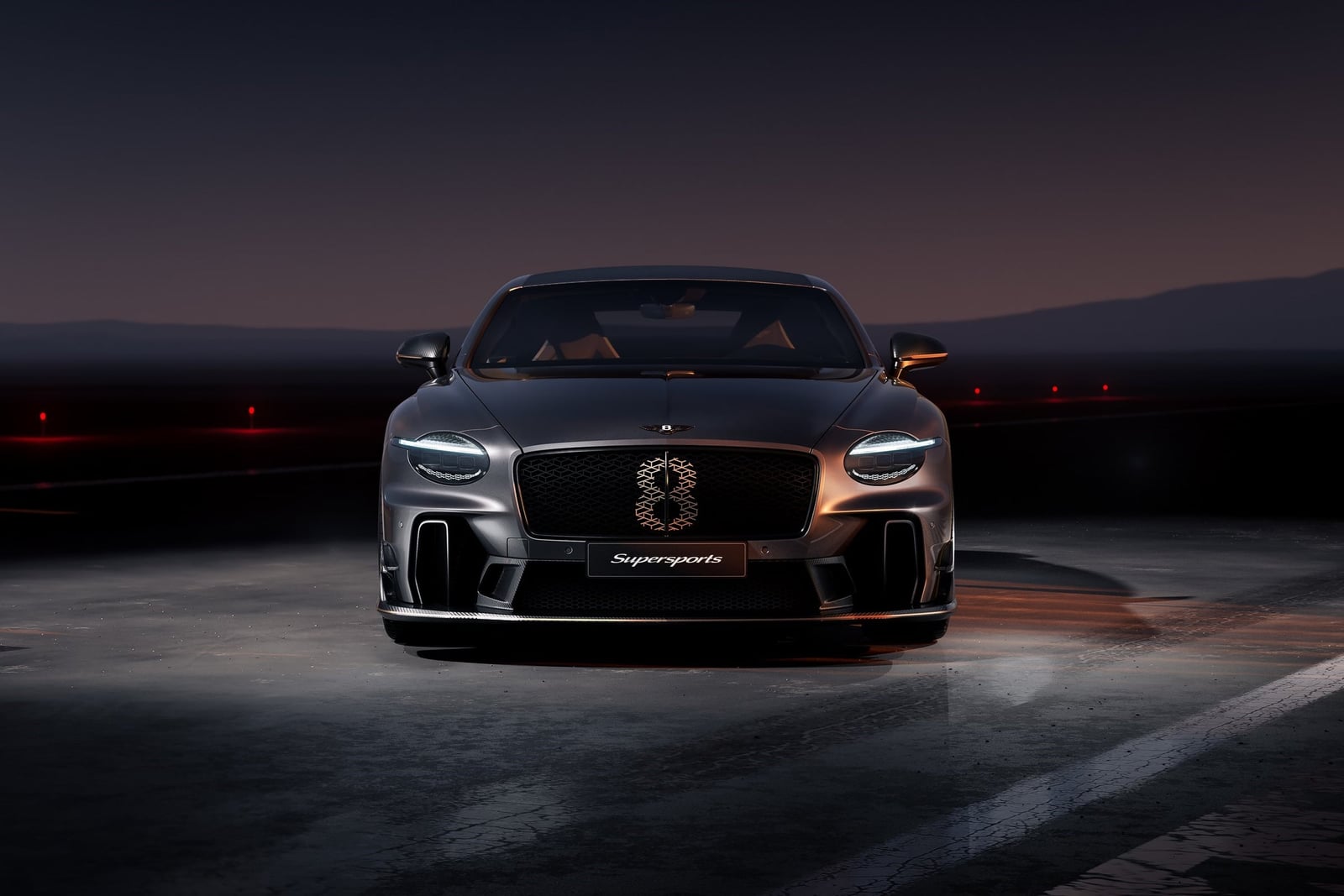
The rest of the hardware is a catalogue of ways to keep a heavy-ish coupe honest. There’s an electronic limited-slip differential, rear-wheel steering and a suspension aided by a 48-volt active anti-roll bar. Outside, the aero is the loudest part of the story. Stacked dive planes, fender blades and the largest splitter Bentley has fitted to a production car work with a new rear diffuser and a fixed spoiler. Bentley says the total downforce is more than 661 pounds greater than that of the GT Speed.
All of that mattered at the Corkscrew, the track’s famous plunge. It drops away from the driver into what looks like nothing, then falls 59 feet through a sequence that demands quick, exact inputs. Mathew found the lighter Supersports well suited to it.
Why the collector set will notice
A limited run is only interesting if the car justifies the limit, and Bentley has given this one several arguments. It is the only rear-drive street Continental. It is light by the brand’s own historical standards. It carries a name that has been used just four times. And it sits in a lineage that Mathew sums up neatly: from the golden age of the Bentley Boys to the marque’s current renaissance, the Supersports has been the Flying B’s internal-combustion benchmark.
That last phrase carries weight. It frames the car as a high point of the combustion era as well as a fast Bentley, and that is how limited-edition cars usually earn their place in a collection.
Inside, the cockpit stays recognizably Bentley. Mathew describes it as “still-baronial,” with the automaker’s signature three-dimensional surfacing and upholstery he rates as peerless. Nothing about the weight loss has turned it into a bare-tub track toy.
Climbing out, Mathew was struck by the distance between the modern car and its bygone-era namesake. The 1925 car made a name by going past 100 mph. Its descendant does 192 mph, and comes with rear-wheel steering and a 48-volt anti-roll bar. Both are two-seaters. Both are Super Sports, give or take a space. Five hundred buyers will get to own the later one.
Via Robb Report