
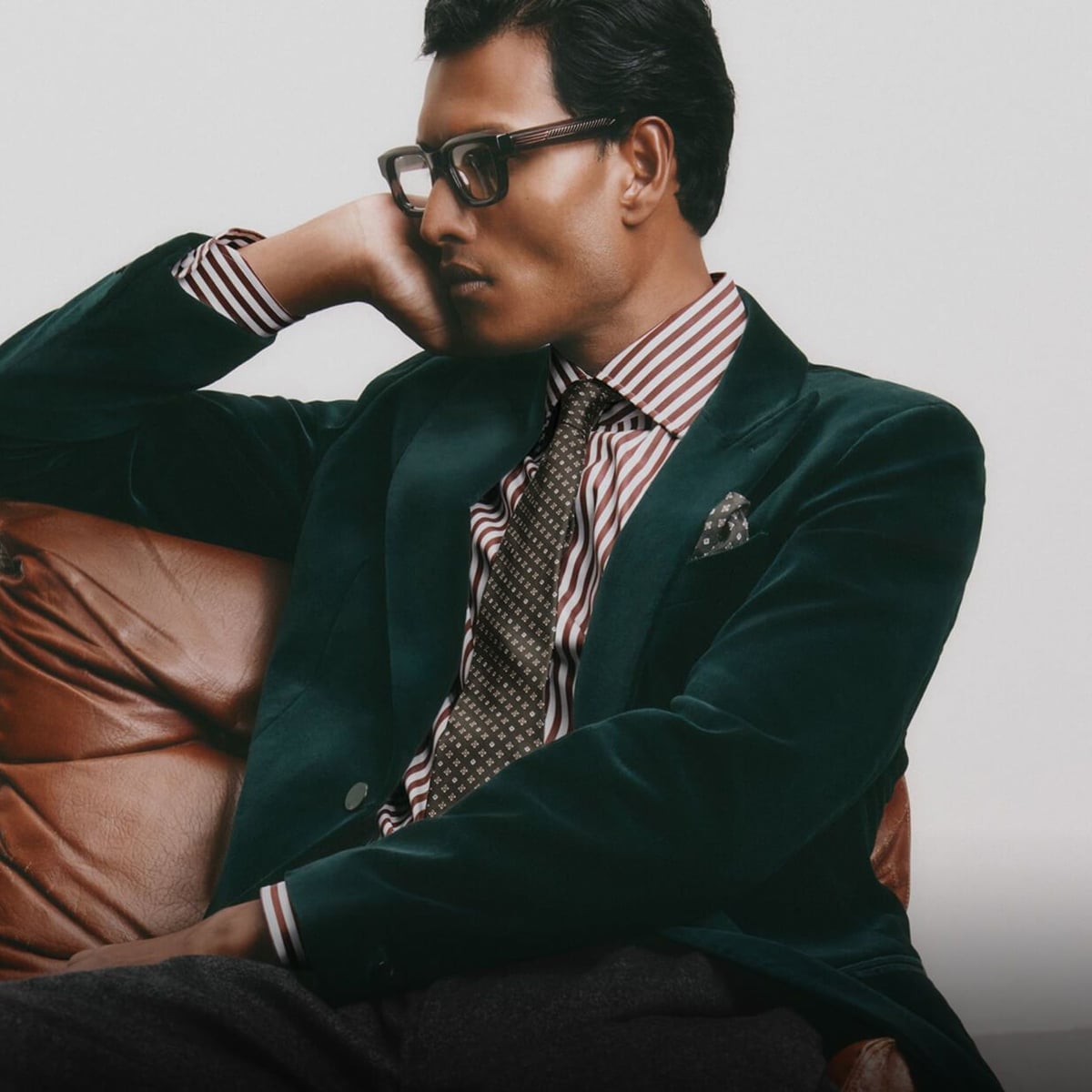
The Reiss fall 2026 campaign trades the studio for wet countryside, with wide trousers, a shearling aviator and collars turned up against the weather.
Most fashion campaigns keep the weather out of the frame. The Reiss fall 2026 campaign lets it in. Robertas Aukstuolis stands in streaming, rain-streaked countryside, and the clothes seem to like it.
The wardrobe is short on gimmicks and long on instinct. There are wide trousers, a shearling aviator, and collars turned up against the damp. Put together, they read as a very particular figure: the British country gentleman, caught on a walk he had no intention of cancelling.
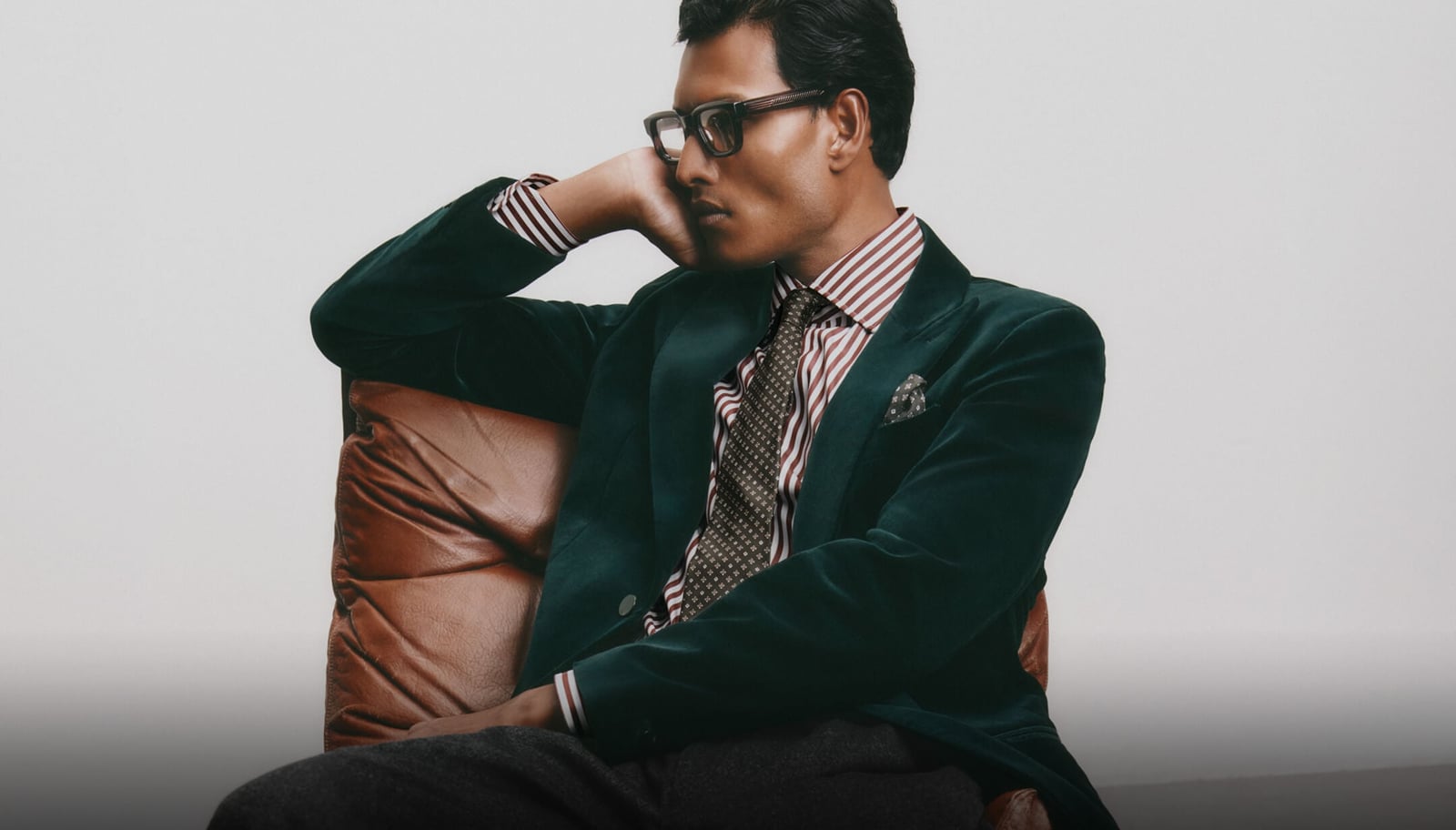
The trouser does the talking
Start at the bottom, because that is where this look starts. A wide trouser has weight and swing. It moves when the wearer does, and it gives a silhouette some authority without asking for a stiff, buttoned-up suit. In a field, on a wet day, that cut makes sense. It looks like clothing that expects to be walked in.
That matters for menswear this winter. Tailoring has been loosening for a while, and this campaign shows where the loosening lands. The trouser keeps its pressed discipline but loses its anxiety. You could wear it to a meeting, then wear it across a muddy lawn, and nobody would think you had dressed wrongly for either.
Shearling, with altitude
Then there is the aviator. Shearling has always been the coat that says its owner is warm and slightly unbothered. Cut as an aviator, it carries a faint memory of cockpits and cold air, which sits nicely against the soft green-and-grey backdrop of rain on open land. The texture does a lot of work. Against smooth wool trousers, shearling adds a second, shaggier note, and the pairing keeps the outfit from looking too tidy.
It also changes how we think of outerwear. Here the coat is not an afterthought thrown over the real outfit. It is the outfit’s headline, and the tailoring below it plays supporting role with confidence.
Collars up, guard down
The smallest detail may be the most telling. A turned-up collar is a gesture that costs nothing and says plenty. It is practical, since it keeps rain off the neck. It also gives the whole look a certain shrug, the sense that the wearer has stopped fussing with the mirror and gone outside.
That shrug is the story. The country-gentleman template has always depended on a studied carelessness: clothes good enough to last, worn as though they were never precious. Reiss borrows that attitude and applies it to a season when most of us are bundled up and grumpy. Rain, in this campaign, is not an obstacle. It is the lighting.
What it suggests for the season
Read as a mood board for the colder months, the campaign makes a quiet case. Off-duty tailoring does not need to mean a hoodie under a blazer. It can mean proper trousers with room in them, a coat with real texture, and a collar that goes up when the sky demands it. It is a dressed-up way of being dressed-down, and it asks for very little effort beyond the original purchase.
Aukstuolis carries it well. He is not posed like a man modelling clothes in the rain; he looks like a man who happens to be wearing them there. That distinction is what sells the whole concept. You believe the walk, so you believe the coat.
There is also something refreshing about a fall campaign that skips the glossy interior and heads for wet grass. Fashion spends plenty of time pretending the weather does not exist. Reiss has gone the other way, and found that the season’s best styling advice comes with a drizzle: wear the wide trouser, button up the shearling, and turn the collar to the wind.
Via The Fashionisto