
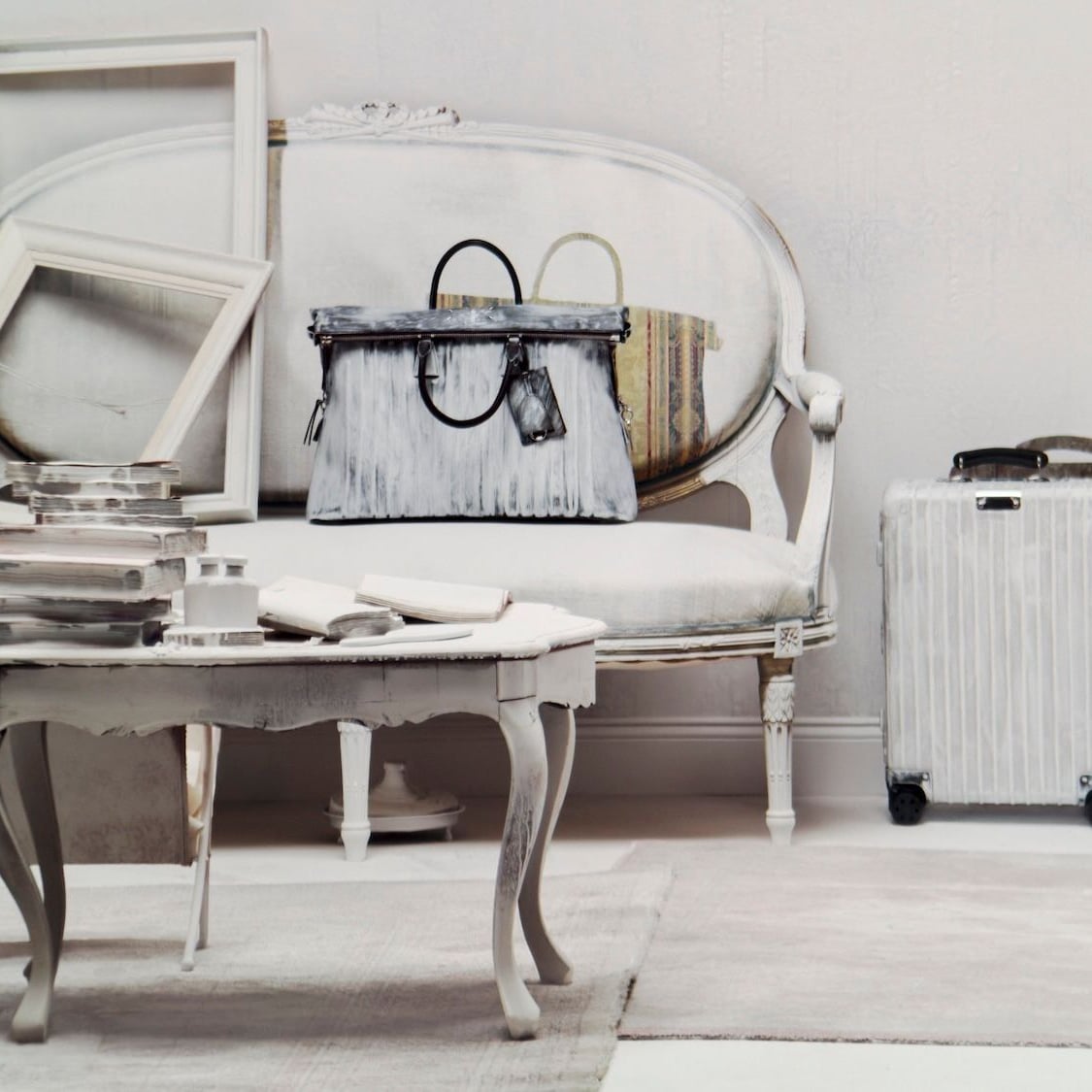
Hand-painted Bianchetto meets aluminium grooves in "Wear, Tear and Patina", a two-piece travel set whose finish is designed to crack, flake and tell your story.
Most luxury luggage spends its life trying to avoid the first scratch. The new Rimowa Maison Margiela collection hands you a suitcase that welcomes it.
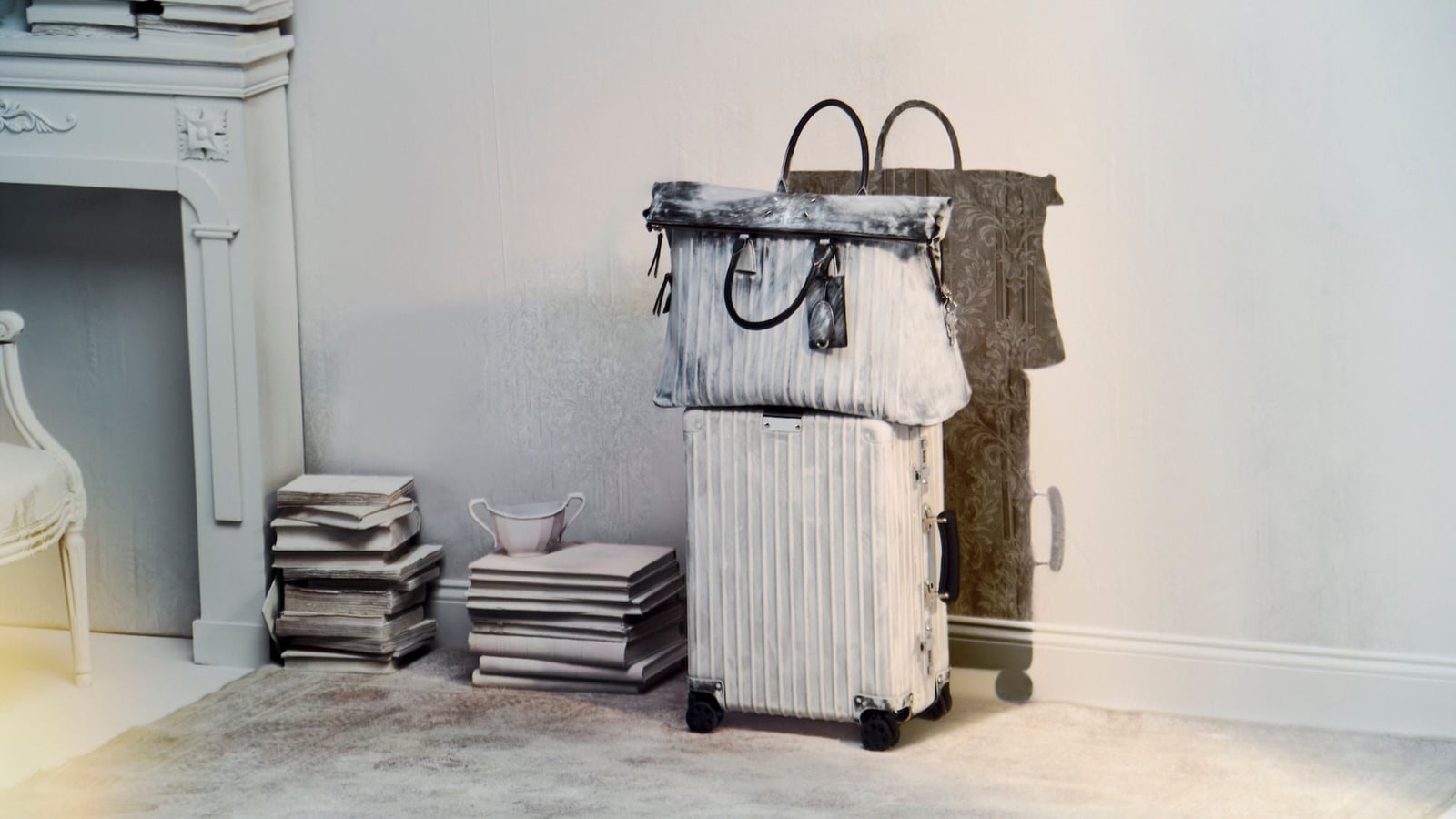
Titled “Wear, Tear and Patina”, the limited-edition set pairs Rimowa’s aluminium Classic Cabin with Maison Margiela’s 5AC XL bag. Both get the French house’s Bianchetto treatment: a coat of white paint, applied by hand, that cracks and flakes gradually as the object is used. Nobody has to distress anything in advance. The travelling does the work, and each piece ends up with a patina of its own.
A finish that keeps a diary
Bianchetto goes back to the beginning of Margiela. In 1988, Martin Margiela painted all the furniture in his first design studio white, and the technique has been a house signature ever since. The look comes from paint ageing on the surface, cracking and chipping at its own pace, and the Classic Cabin carries it in hand-painted white.
The fit with Rimowa is almost too neat. Dents, scratches and patina on a Rimowa case have long served as personal records of heavy travel, the kind of marks owners tend to wear with some pride. Margiela’s philosophy likewise treats the traces of time as a central design idea. Here, the two houses simply agree on the point and put it on a baggage carousel.
The white overpaint is meant to patinate and chip away with age, which suits the nature of luggage: it gets marked by use whether anyone plans for it or not. This collection just makes that the point of the exercise, so that each mark reads as a record of a journey rather than a flaw to be buffed out.
Grooves on leather, stitches on aluminium
Each house borrowed from the other. Rimowa’s grooves, which first appeared in 1950 on an aluminium suitcase and drew on early aviation, now run across the 5AC XL. They are formed straight into the bag’s leather with a high-frequency technique, which means the raised lines need no stitching. The bag has a removable cross-body strap and leather loops that let it attach to the suitcase for travel.
Margiela’s contribution shows up in the construction details. Inside the Classic Cabin, a white lining, exposed stitching and overlocked edges give the impression of a garment turned inside out. The aluminium logo badge is finished with four white stitches, the house’s signature number. Those small reminders of the time and technique behind each piece suit a collection about how things wear.
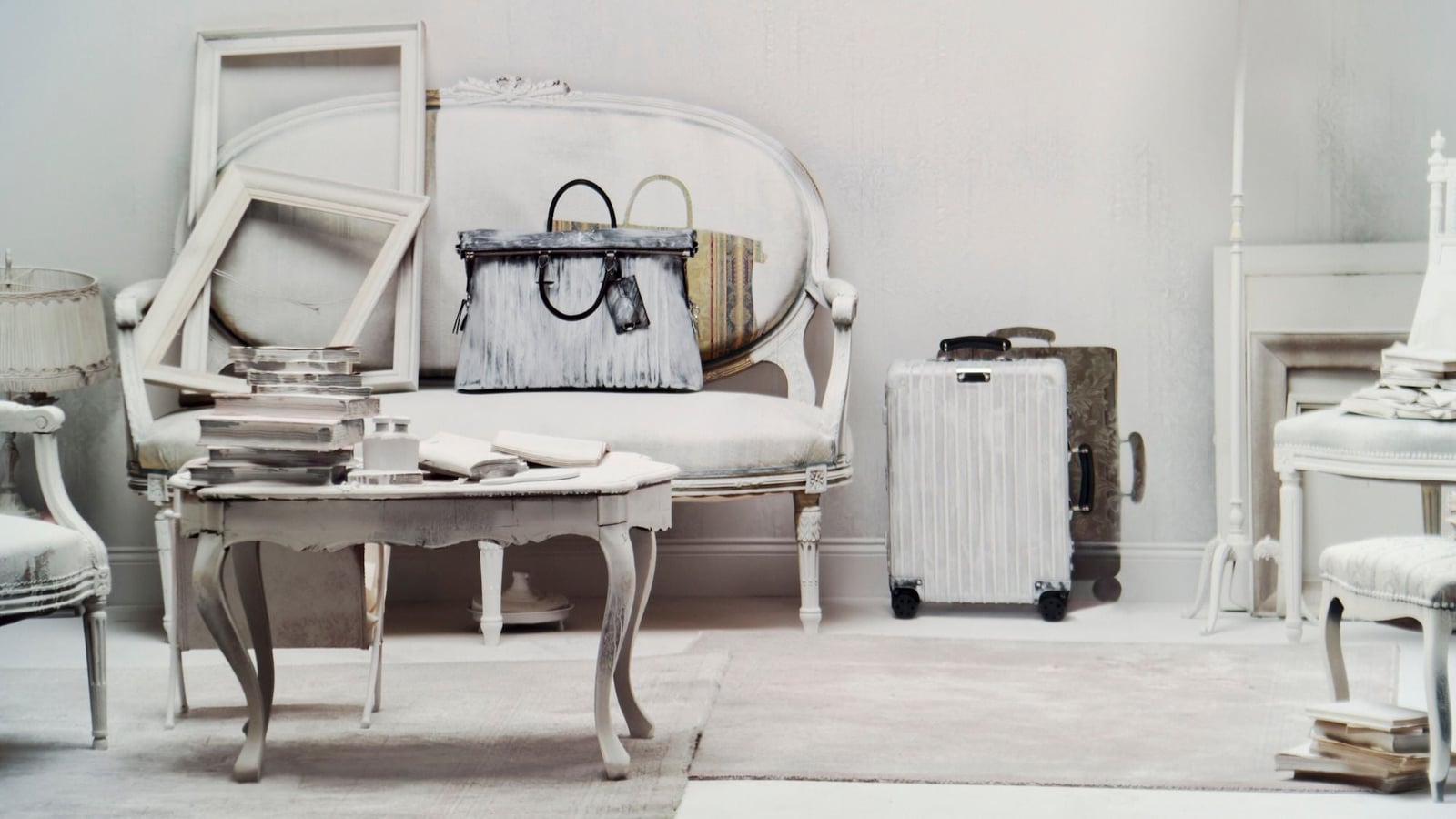
Practicality stays intact. Both pieces keep Rimowa’s Multiwheel system, TSA-approved locks and telescopic handle. A bespoke leather tag pairs Rimowa’s address label, a nod to travel, with Margiela’s Key Bell charm.
Paint on Paris walls
The campaign was directed and photographed by Dexter Lander, who set it in a Haussmannian apartment. A playful burst of white leaves the silhouettes of the suitcase and bag visible against the walls, a neat visual rhyme for a collection about marks left behind.
There is a quiet tension in the idea, too. Rimowa’s grooves are repetition and precision, the look of an engineered object. Bianchetto is hand-applied and meant to give way over time. Put one over the other and you get a case that starts out crisp and white, then slowly becomes yours.
The Rimowa x Maison Margiela Classic Cabin and 5AC XL arrive on 19 November 2026 in selected stores and online at both houses. The Classic Cabin is priced at €3,200 and the 5AC XL at €3,600.
Whether you pack it with a light hand or a heavy one, it’s the one suitcase that gets better looking from being thrown around. Every chip will be a small, unplanned collaboration between the object and the airports it has seen.
Via Schön! Magazine