
By Robin Johns
The Quiet Apartment as Self-Care – Designing a Calmer Home Where Sound Is Part of the Style
You get home after a day of subway brakes, open-plan office chatter and someone’s phone call on the street, close the door, and… it’s still loud. The kettle sounds like a jet. Your own footsteps bounce off the floor. That clean, minimal apartment that looks so good in photos has bare walls, hard surfaces and almost nothing soft, so every sound hangs around a beat too long.
Self-care usually means candles, good sheets, a plant or six. Sound rarely makes the list. We’ll spend weeks choosing the right linen, yet almost nobody thinks about how a room sounds – which is exactly where acoustic panels for home come in, doing their job quietly while looking like part of the decor.
This isn’t about turning your bedroom into a recording studio. It’s about a few rooms, a few walls, and a home that feels calmer the moment you walk in.
Why Minimalist Apartments Sound So Loud
The style we love right now is tough on acoustics. Hardwood or polished concrete underfoot, large windows, white walls with one carefully chosen print, a sofa and not much else. Every one of those hard surfaces reflects sound back into the room instead of absorbing it, and with so little fabric around, there’s nothing to catch it. The result is echo: voices that ring, music that turns harsh, a general hum that makes a space feel busier than it is.
One honest note before going further. Panels make sound inside a room calmer, but they won’t block the upstairs neighbor’s bass or the traffic outside. That’s a different problem with different fixes. What panels do is soften everything happening within your own four walls, and in a small apartment that’s most of what you hear anyway.
Where Calm Starts – Room by Room
You don’t need to treat the whole place. Start where you rest, and the difference shows up fast.
The Bedroom
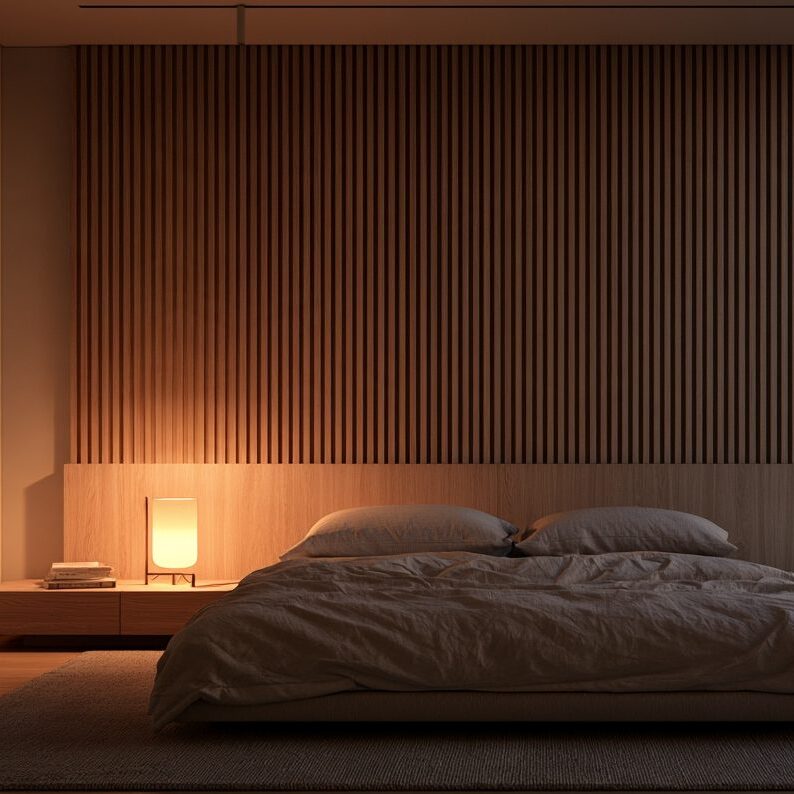
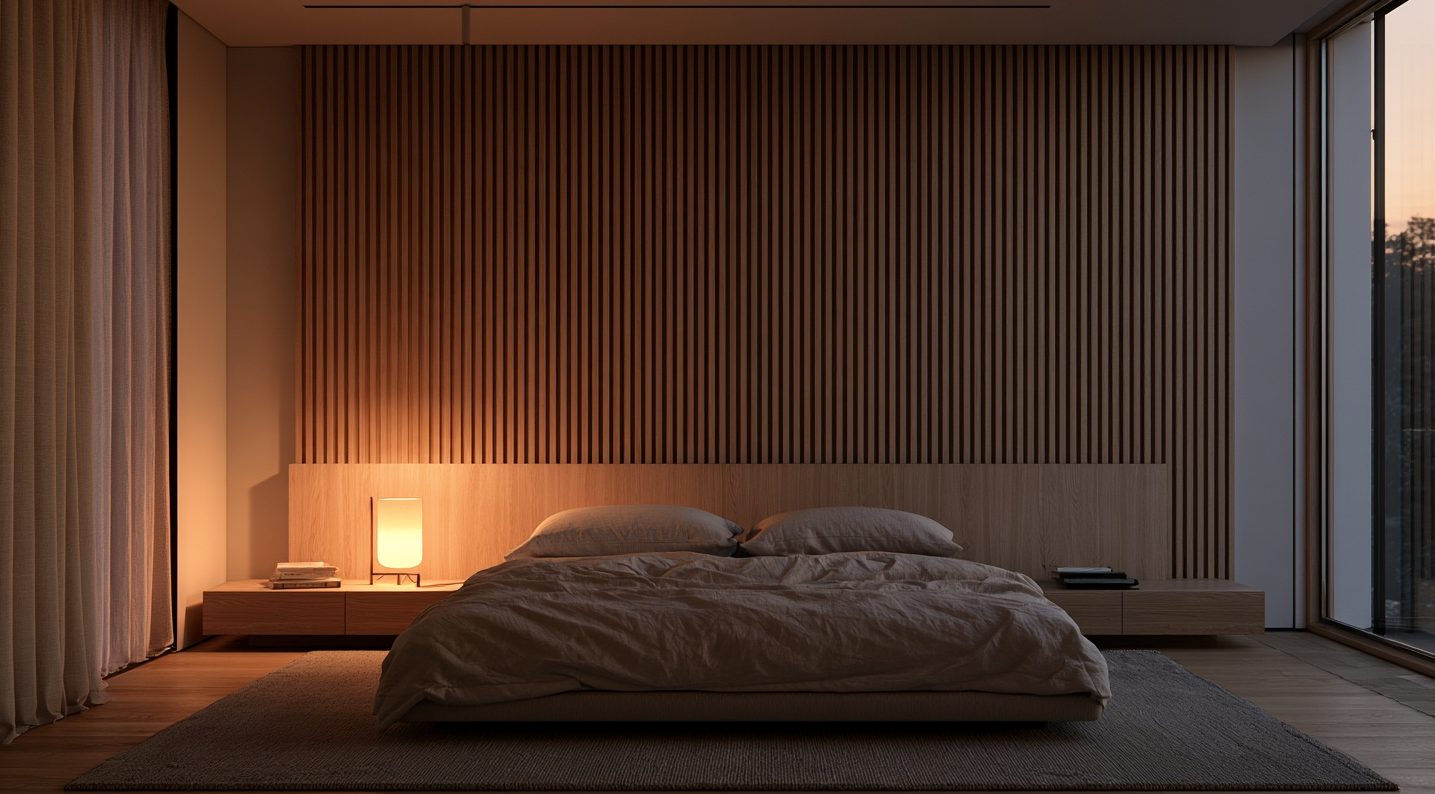
This is the room that most needs to feel still. Bedrooms are often the most echoey spot in an apartment because people keep them minimal on purpose – a bed, a lamp, a bare wall above the headboard. That wall is the obvious place to begin. A set of fabric panels or a wood slat section above the bed does the work of a statement headboard and absorbs sound at the same time. Late-night conversations stop sounding like they’re happening in a hallway.
The Reading Nook
A chair by the window, a lamp, a stack of books you swear you’ll finish. Treating just the wall around that chair changes how the corner feels – more enclosed, more private, almost like a small room inside a bigger one. It sounds like a minor thing. It isn’t. Journaling, reading or just sitting with coffee gets noticeably more pleasant when your own page-turning doesn’t echo.
The After-Work Corner
Then there’s the sofa, where most of us end up watching the latest episode of whatever everyone’s talking about. In an echoey living room, dialogue gets muddy, so the volume creeps up, and suddenly the evening is louder than the office was. With a couple of panels on the wall opposite the screen, speech stays clear at a lower volume. Your neighbors will appreciate it too, honestly.
Making Panels Part of the Look
Panels don’t have to look like gear from a studio. The good ones read as interior design first, and you’d only know what they do if someone told you.
Wood Slat Walls
Slat panels are everywhere in interiors right now, and for once a trend happens to be useful. Wood strips mounted over a felt backing bring warm texture to a white room, and the backing absorbs sound behind them. Vertical slats make a ceiling feel higher – handy in apartments where it isn’t. Light oak keeps things airy, while darker tones work well in a bedroom meant to feel cocooned.
Fabric Panels in Your Own Palette
Fabric-wrapped panels come in a range of colors, so they can disappear into a wall or stand out on purpose. For calm spaces, I’d pick something close to your wall color, maybe a shade deeper, and let texture do the talking. A sage panel next to a sage throw. Warm gray in a room full of linen. It starts to look intentional, like it was always part of the plan.
Shapes and Printed Art
If rectangles feel too serious, hexagons and circles let you build a composition on the wall, closer to an art installation than anything technical. Some panels can carry a printed image as well, which means the piece hanging over your sofa can be artwork and sound treatment at once. Good option for anyone who keeps meaning to buy art for that empty wall.
Getting Started Without a Renovation
Begin with one wall in the room where you spend your quietest hours, live with it for a week, then decide whether you want more. If you rent, skip adhesive and go with clip mounting – panels hang on small metal clips and come down later, leaving only a few screw holes, which is a much easier conversation with your landlord. Pair the panels with what you probably already have, a thick rug, heavier curtains, a couple of cushions, and the room softens even further.
When you’re ready to choose, Sound Pro Solutions is a good place to look. The company, based in Long Island City, New York, sells panels for bedrooms and living rooms, including wood slat, fabric-wrapped, and shaped options, with custom sizes and fabric colors, and the option of printing an image on the panel.