Demna’s Spring/Summer 2027 show turned the runway into a boutique, and gave a first look at the Gucci stores to come, including Beverly Hills.
For his second show at the house, Demna didn’t build a runway. He built a store. On September 25, during Milan Fashion Week, guests arriving at the Allianz MiCo found a full-scale Gucci boutique constructed inside the exhibition hall. It had marble walls, dark timber, velvet banquettes and deep-pile carpet, with shelves of bags and rails of clothes. Called The Store Show, it was part runway, part retail preview. Models moved through the rooms as if they were shopping, and the audience was, in effect, standing inside Gucci’s future.
A temple of desire, rebuilt
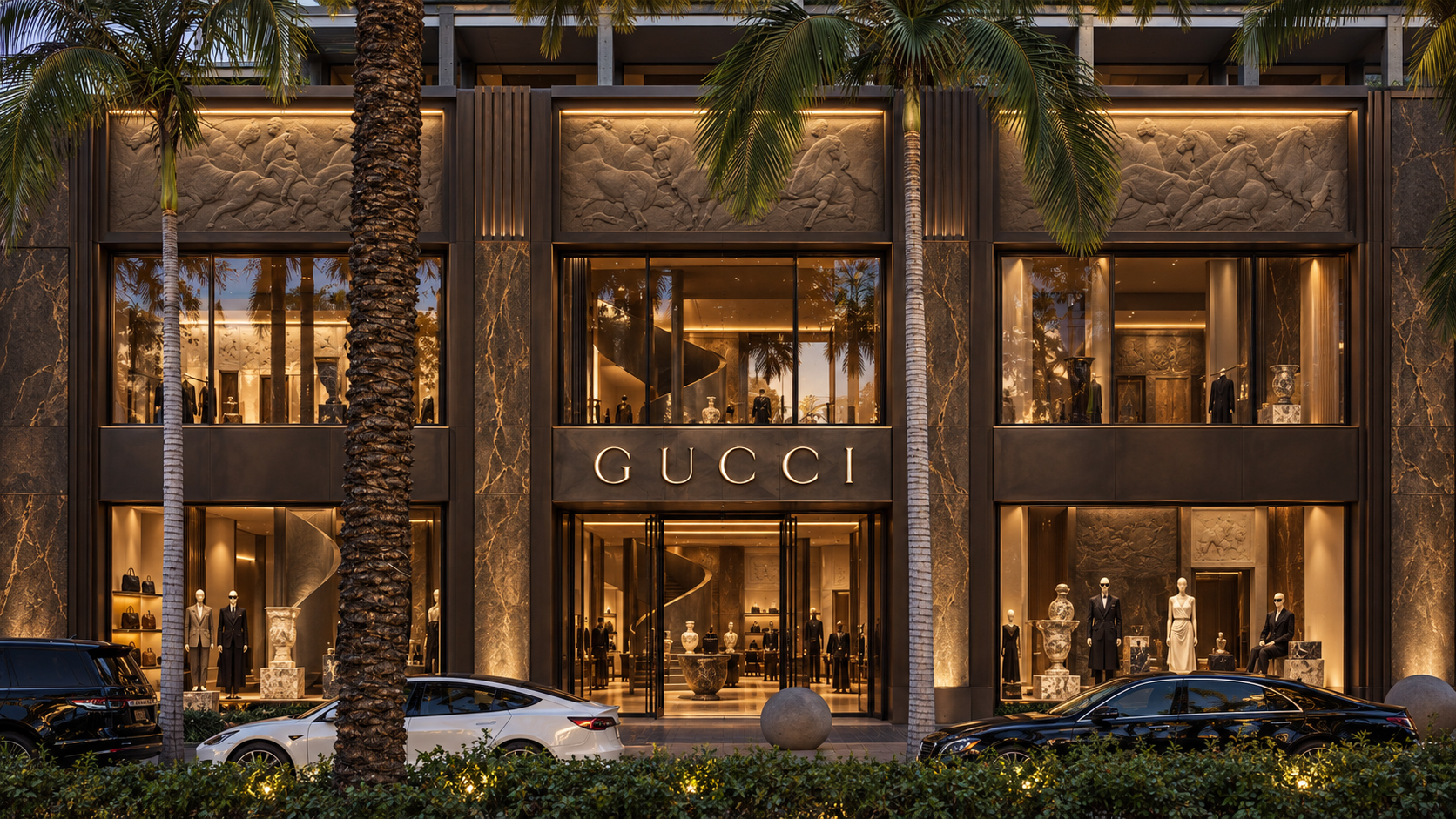
The set was more than scenery. It’s the blueprint for Gucci’s new store concept, which Demna has shaped himself. The mood is grand and knowingly bourgeois: four monochrome rooms, bas-reliefs, stone frescoes, classical statues and urns, all offset by a touch of Brutalism to keep things from getting too polite. Demna has spoken about wanting a monumental quality, recalling the late 1970s, when Gucci’s stores were destinations in their own right. Back then, the house’s best clients in New York and Los Angeles were given a golden key to the private Gucci Galleria upstairs.
The idea behind it fits in five words from the show notes: Gucci is “luxury that wants to be seen.”
From the runway to the boutique
The set was more than a backdrop: it was a teaser. Gucci has confirmed that the look of The Store Show will shape its boutiques. We imagined what the store may look like based on the runway vibe … marble and dark wood, velvet banquettes, classical statues and deep carpets, with the grandeur of a 1970s Gucci boutique brought up to date. what do you think?
 The collection
Demna presented this as the first collection to show his complete personal vision for Gucci, built on everything he has learned about the house since arriving. The show came in two parts, men’s first and then women’s, so each had its own moment.
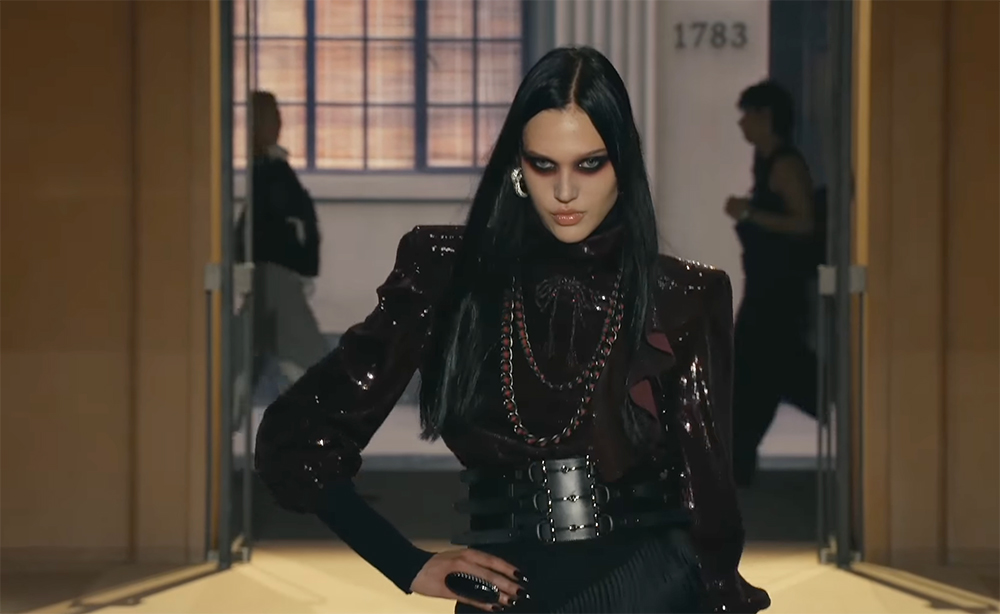
Rather than one Gucci customer, Demna cast a gallery of characters, among them the rebellious aristocrat, the snob and the eccentric. Think of bourgeois codes pulled slightly out of shape. For men, that meant equestrian tailoring, sharp cropped suits, long double-breasted overcoats and preppy layers of polos and tucked-in ties. The house’s heritage details were played with in scale: horsebits shrank to collar trims or grew into oversized jacket fastenings, and bamboo turned up as zip pulls.
The women’s half moved through the house’s most seductive eras. There were thigh-skimming skirt suits with opaque black tights and pointed stilettos, and low-slung pencil skirts with bralettes and strong-shouldered blazers, a clear nod to the Tom Ford years. Floor-sweeping jersey gowns came with cut-outs and high slits. Accessories leaned on the archive, including the logoed Boston bag, chain bags and the GG belt. Rosie Huntington-Whiteley, Poppy Delevingne and Alex Consani were among the cast.
Traces of Demna’s Balenciaga years remained, in the elongated shoes, oversized proportions and a gothic edge to the tailoring, but critics largely agreed he had translated them into Gucci’s language.
What the critics said
Reviews were warm. Several described Demna’s Gucci as finally coming into focus: clear, precise and very chic. Writing for AnOther, Alexander Fury praised the collection’s wit and generosity, and read it as Gucci selling a dream that means something different to every customer. The Business of Fashion framed the season around a bigger question: whether Demna has solved the identity crisis Gucci has faced in recent years. On this evidence, many think he’s getting close.
Why it matters
With The Store Show, Demna made a point few designers make so directly: the runway and the boutique are part of the same experience. The clothes, the characters and the marble all tell the same story. It’s a Gucci that wants to be desired, visited and seen. Paris gets it first. Beverly Hills is expected to follow.