3 Down, 10 to Go: The Verdict on AHS: 13 So Far
A review of the early reviews of American Horror Story: 13
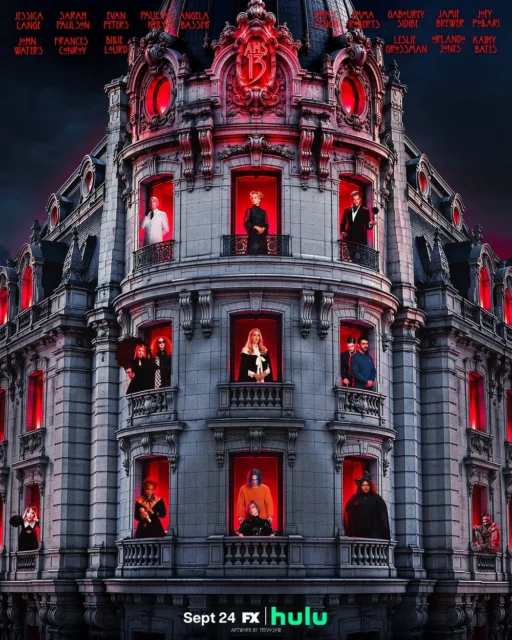
After a long wait, American Horror Story returned on September 24 with its thirteenth season, simply titled 13. It’s on FX, Hulu in the US and Disney+ elsewhere. Ryan Murphy promised an event, and on paper he delivered one: Jessica Lange, Sarah Paulson, Evan Peters, Angela Bassett, Kathy Bates, Frances Conroy, Emma Roberts, Billie Lourd and Gabourey Sidibe, all under one roof. Only three of the thirteen episodes have aired so far, so every verdict is provisional. But the first impressions are already split down the middle, and not where you might expect.
The numbers tell two stories
Critics are, for once, on the show’s side. The season holds an 83% Tomatometer score, with five of the first six verified reviews positive. Audiences are far less kind. The Popcornmeter sits in the mid-40s, the lowest audience score in the franchise’s history, even as the season went straight to No. 1 on Hulu the day after its premiere. People are watching. Many of them just aren’t convinced yet.
The premise
Ben DeSoto (Joey Pollari) is a hospice caretaker with a crippling fear of the number 13. He takes a job at the Apollyon, a New York residential building whose tenants are, conveniently, characters from Murder House, Asylum, Coven, Freak Show, Hotel, Cult, Apocalypse and Double Feature. Lange’s Constance Langdon lives on the 13th floor, naturally. The episodes are half an hour long and released in batches, with a finale on October 29.
What critics like
Jessica Lange, above all. It’s the one point every review agrees on, even the negative ones. After eight years away, she’s described again and again as the season’s centre of gravity, stealing scenes with sharp lines and monologues. Slant Magazine, the only outright pan so far, still calls her performance a highlight.
The reunion itself. Slate compares the effect to a superhero team assembling, and several critics admit the thrill of seeing Cordelia Goode or Madison Montgomery walk back into frame. Dread Central notes that the returning witches feel woven into the story, not just parachuted in.
A return to the old tone. Slate argues the writers have rediscovered the balance of camp and the grotesque that defined the show’s early years. JoBlo and Dread Central both enjoy the dark humour of the opening.
Murphy behind the camera. Directing his first episode since 2015, Murphy wins praise from Dread Central for a distinctive visual style, including a disorienting fisheye look.
The short format (for critics). Some reviewers see the half-hour runtime as a discipline, keeping the show from the long detours that sank recent seasons.
What critics don’t like
It’s made for superfans, and only superfans. This is the most repeated reservation. TheWrap sums up the season as a “beautifully puzzling ode to superfans”, and warns that casual viewers will be lost in the callbacks. Several reviews suggest homework before pressing play.
The half-hour episodes. Praised by some, they’re the main target of others. Screen Rant argues the first episodes jump between storylines without building one thread that holds attention. JoBlo suggests the format seems designed mainly to fit thirteen episodes, and says very little happens across the first three.
The number 13, everywhere. JoBlo and TheWrap both find the constant references to thirteen heavy-handed. What starts as a clever motif soon feels like a gimmick.
Fan service over story. Dread Central finds some cameos hollow, closer to the laziest crossover tactics of superhero franchises than to earned moments. JoBlo goes further, calling the season neither scary nor original, and less impressive than the early years.
A subplot that dates badly. Dread Central singles out an AI chatbot storyline as heavy-handed, along with a reliance on the worn “old people are creepy” trope.
Who’s missing. Slate regrets the absence of long-time regulars Lily Rabe and Denis O’Hare.
What everyone is confused about
After three episodes, the question marks are piling up:
- Who, or what, is Mr. Nas? Critics have floated a demon, an eldritch god and a biblical figure. The show hasn’t said.
- How do the threads connect? Reviewers can’t yet see how the wraparound story, the flashbacks and the returning characters will come together.
- Why Ben? JoBlo asks why the season follows a new character when it has a building full of legends.
- The purgatory logic. Dread Central wonders how the rules explain dead characters from past seasons turning up.
To be fair, three episodes of a thirteen-part mystery are meant to raise questions, not answer them. Whether these turn out to be deliberate puzzles or loose ends is exactly what the next ten episodes will decide.
Why fans and critics disagree
The split comes down to expectations. Critics, reviewing the opening, judged a promising, well-acted, tonally confident return. Fans, after years of waiting, expected a grand unified theory of the AHS universe told at the show’s usual length. Instead they got half-hour chapters that end just as the atmosphere builds. Slate adds a factor that raises the stakes: with Lange’s return billed as a farewell and the Coven storyline reportedly closing, 13 is being judged as a de facto finale, and finales are held to a much higher bar.
The verdict so far
Three episodes in, AHS: 13 is well cast, well directed and, when Jessica Lange is on screen, very watchable. It’s also crowded, cryptic and written for people who remember every season. Critics are willing to give it the benefit of the doubt; audiences, so far, are not.
But there’s reason for hope. The pieces are all on the board: a cast most shows could only dream of, a tone that finally feels like vintage AHS, and a mystery with real potential. If the next ten episodes can turn the callbacks into a story and the questions into answers, 13 could yet become the send-off fans have been waiting for. The Apollyon has thirteen floors, and we’ve only seen three. We’ll be back when the elevator reaches the top.