


The Modern Mystery Man: Drew Dusterhoff
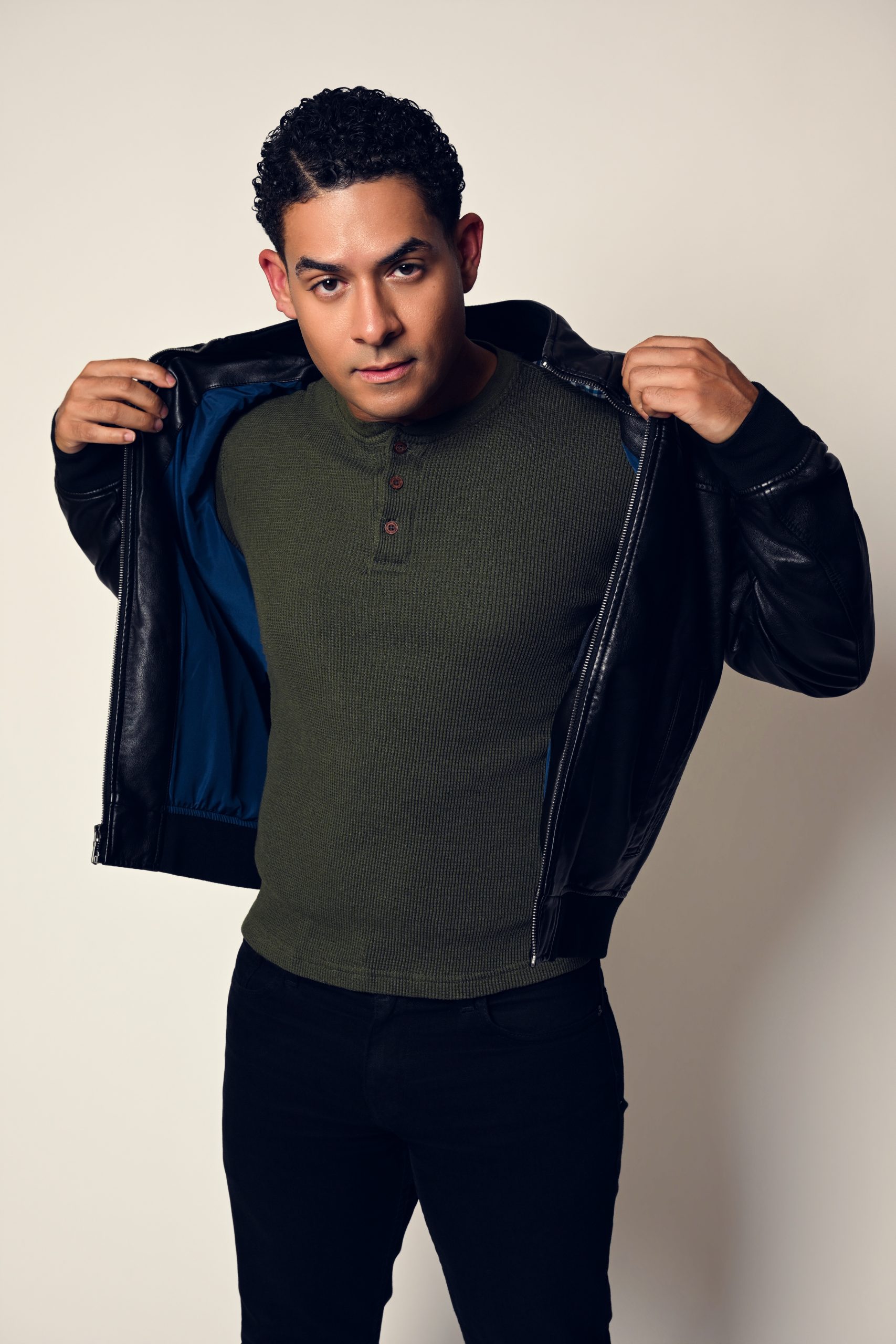
In an era where visibility is often mistaken for substance, Drew Dusterhoff is taking a different approach. The actor, writer, producer, and former medical professional has built his career around discipline, intentionality, and an unwavering commitment to the craft. Rather than chasing constant exposure, Dusterhoff has cultivated a presence defined by mystery, intensity, and a distinctly old-school cinematic sensibility.
That approach is on full display in Lincoln Must Die, the upcoming indie action thriller in which Dusterhoff stars as Reyes, a calculating and formidable figure whose evolution drives much of the film’s tension. Serving as both lead actor and producer, Dusterhoff helped shape the project from the ground up, bringing a sharp creative vision to a story rooted in power, survival, and consequence. The film marks a significant step forward for the rising talent, whose commanding screen presence and understated performances continue to attract attention.
Beyond Lincoln Must Die, Dusterhoff recently appeared in a Kid Cudi music video directed by Ti West and produced by Jordan Peele, further expanding a body of work that favors atmosphere, complexity, and visual storytelling over convention. As he continues to carve out a unique lane in the entertainment industry, Dusterhoff remains focused on creating work that leaves a lasting impression, both on screen and behind the scenes.
BELLO sits down with Drew Dusterhoff to discuss Lincoln Must Die, his dual role as actor and producer, the philosophy behind his career strategy, and why scarcity, discipline, and authenticity remain central to his artistic identity.
Q: Lincoln Must Die has such a dark, cinematic energy. What initially pulled you into the world of this story and the character of Reyes?
A: A tactical opportunity to explore an uncompromised archetype. Reyes is no puppet; he is an unrelenting weight that demands observation. As Executive Producer, my command is to let that creative vision speak entirely for itself.
Q: Reyes evolves into a deeply intimidating and complex villain throughout the film. What was the most challenging part of stepping into that mindset?
A: I do not acknowledge “villains,” only men with absolute objectives. Reyes has a family, a legacy, and a fierce code of survival. The task was locating the truth in his necessity. Everyone fights to survive.
Q: You’ve described your career strategy as being rooted in mystery, scarcity, and intensity rather than oversharing online. In an era of constant visibility, why was that important for you?
A: Constant exposure breeds over-familiarity. If you are everywhere, you become ordinary. I move with strict intention. A true protagonist belongs exclusively to the frame when the work is happening.
Q: Your look and presence feel very classic Hollywood with a modern edge. How would you describe your personal style off camera?
A: Utilitarian minimalism. Heavy materials, sharp lines, zero decorative noise. Less is always more. I wear clothes built for function and grit, completely unconcerned with public validation.
Q: Fashion and film often go hand in hand when it comes to building a memorable persona. Are there any actors, musicians, or cultural icons whose style or presence has inspired you?
A: The Charles Bronson era. Men who brought an unrefined, blue-collar realism to the screen without asking permission. Whether wearing denim or a sharp suit, their internal presence gave the clothes meaning.

Q: Between acting and producing, how do you balance the creative side of storytelling with the business side of building a long-term career in entertainment?
A: They are the same machine. Talent is merely the layout; steady capital is the engine. Producing secures the ground I stand on. Controlling both under one banner ensures the design is never compromised.
Q: Your performances rely heavily on subtle expressions and physical presence. Do you approach roles almost like choreography or visual storytelling?
A: Film is visual. If you cannot convey the stakes through the economy of a glance, leave the frame. Every movement is a micro-transaction of physical threat or truth. Dialogue is merely punctuation.
Q: You recently appeared in a Kid Cudi music video directed by Ti West. What was that experience like creatively, and how did it differ from traditional film work?
A: A music video strips away the safety net of spoken dialogue. It forces total reliance on raw presence and visual texture. It is a compressed sprint of cinematic energy, requiring you to own the space instantly.
Q: Outside of acting, what inspires you creatively day to day, whether it’s fashion, music, photography, travel, or art?
A: The real world. A decade on the medical frontline observing life and death removes the need for digital distraction. I am inspired by music, structural permanence, real labor, and God. I trust what is built to last.
Q: BELLO celebrates individuality and personal evolution. As your career continues to grow, what kind of artist and public figure do you ultimately want to become?
A: A force on the screen; a ghost off it. I want to provoke the divine, God-given talents inside the audience. Pick up your abandoned scripts and dreams; it is never too late to conquer. See you at the theater.