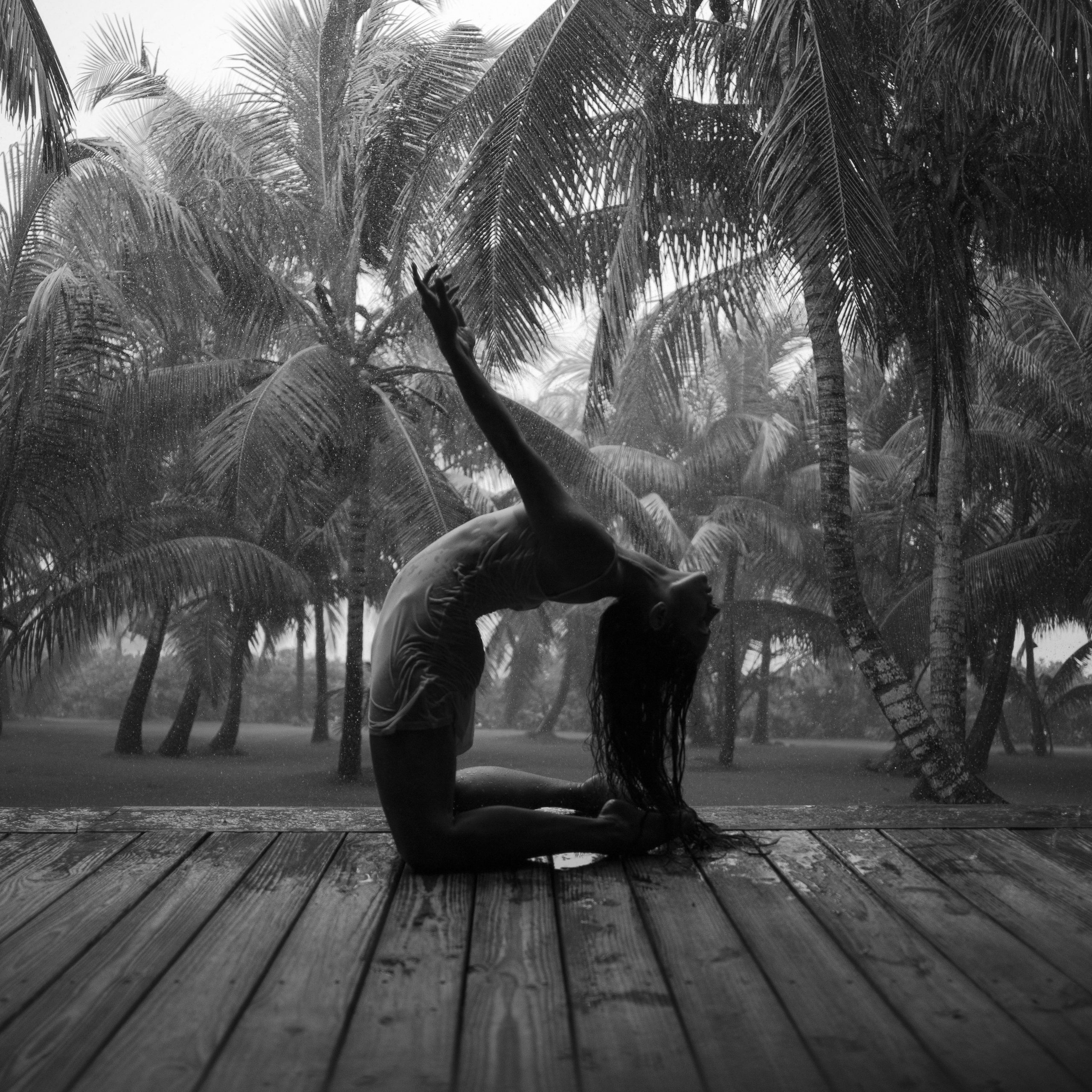
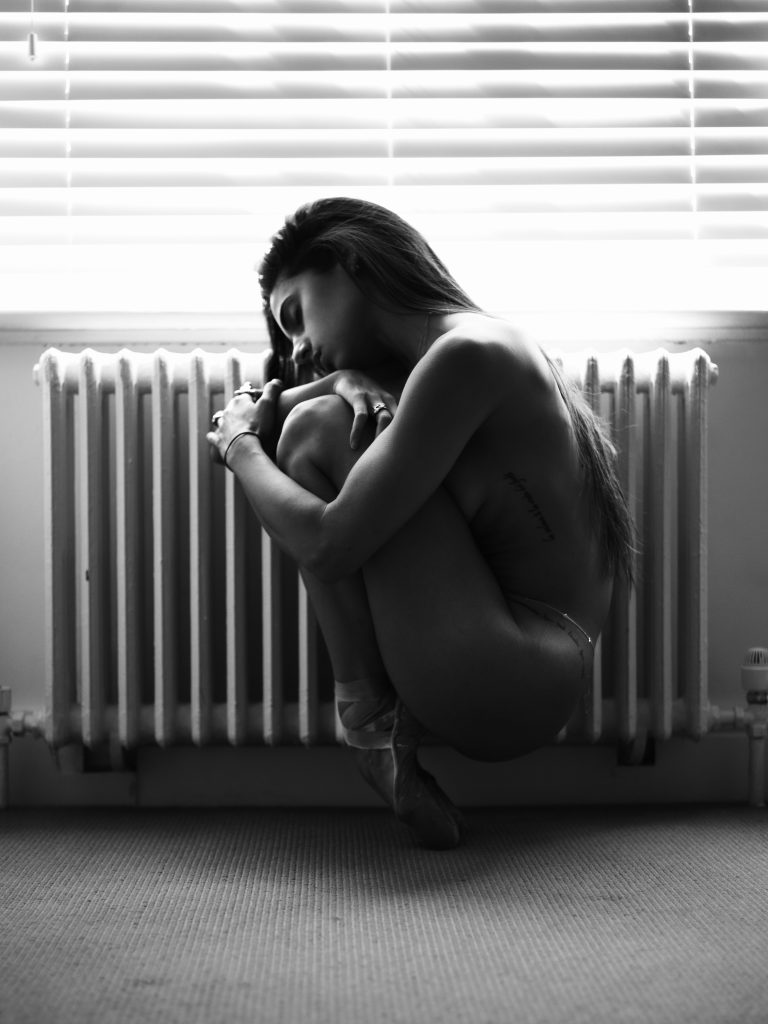
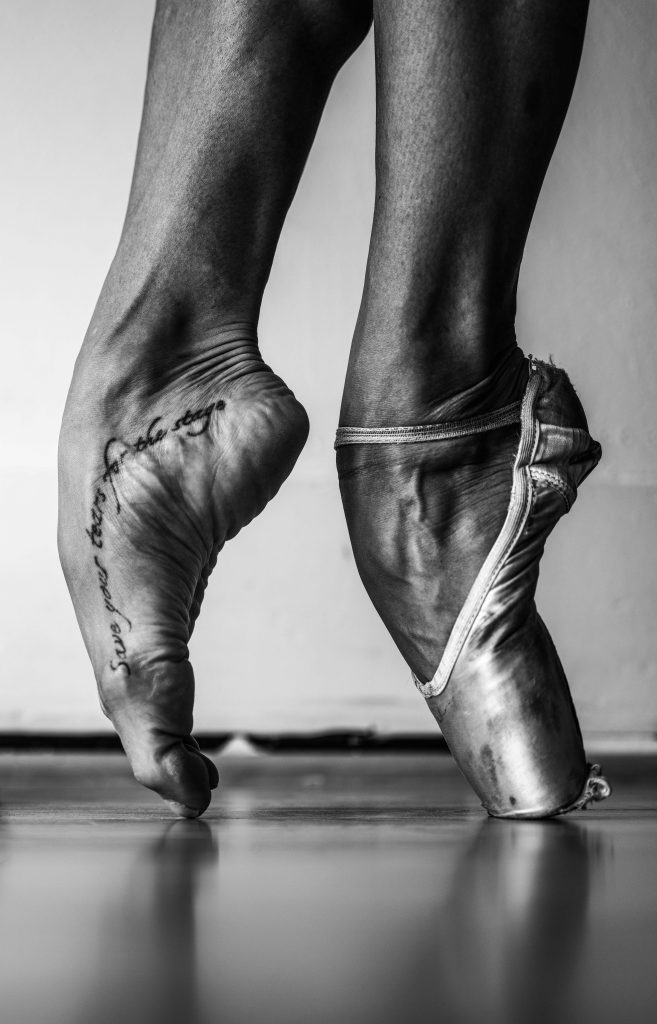
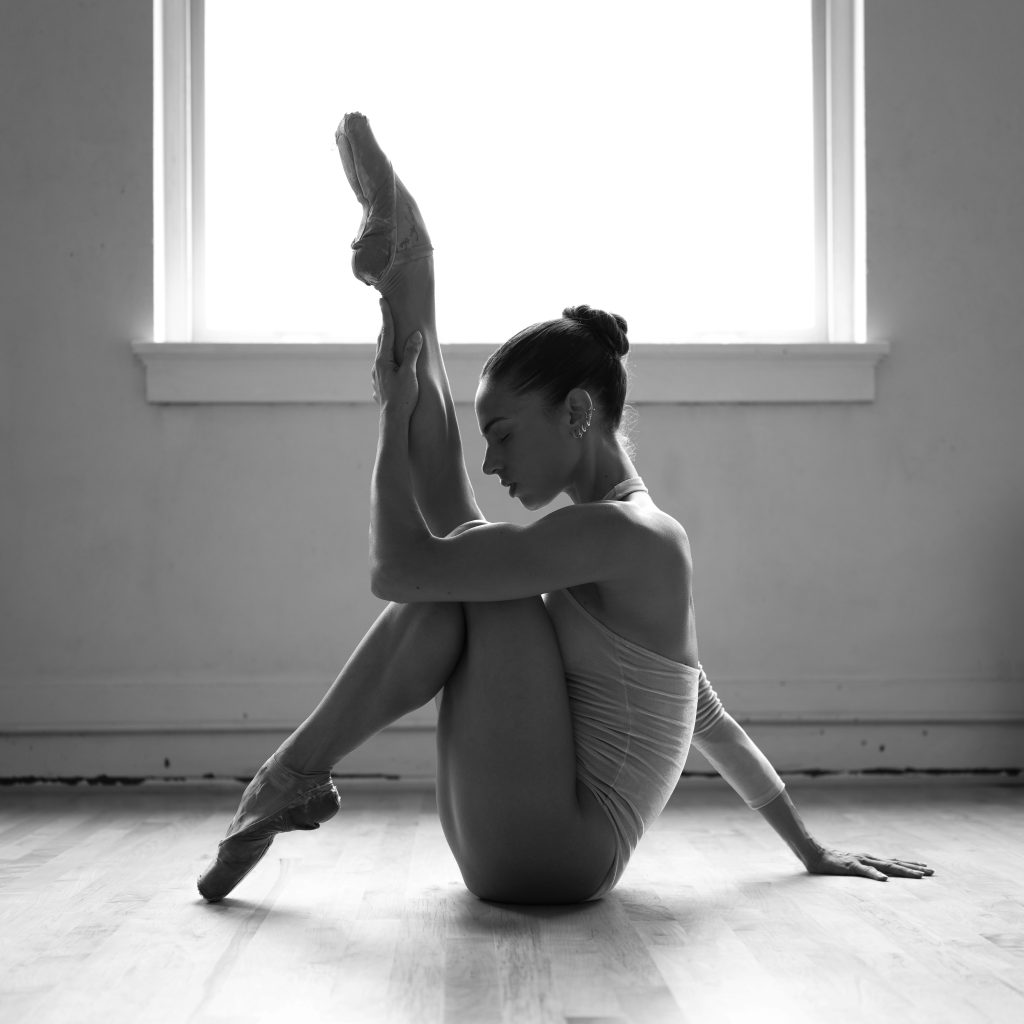
Kylie Shea has never confined ballet to the stage. As a dancer, choreographer, and multidisciplinary artist, she has built a career translating movement into something far more expansive, blurring the lines between performance, film, and visual art. Most recently, her self-portrait series was featured in the BALLET exhibition at Leica Gallery New York, where she turned the lens inward to capture the same emotional depth and physical precision that have defined her work in motion. The result was an intimate body of images exploring identity, vulnerability, and the quiet power of stillness, offering a rare glimpse into the inner world of an artist who has long moved between disciplines.
Bello: Your photography exhibit at Leica Gallery New York is your first major public showing of self-portrait work. How has your understanding of self-portraiture evolved over the past decade, and what does it feel like to bring those intimate images into a gallery space?
Kylie: My photography journey began in 2008, but it wasn’t until 2020, when my work with Leica cameras began, that this documentation of self developed a much deeper meaning. The images from this series feel like diary entries that capture where I’ve been not just physically, but mentally, emotionally, and spiritually. It is my hope that sharing these very vulnerable and personal moments will inspire others to explore the powerful, therapeutic, and healing power of self-portraiture.
Bello: As a dancer you’ve spent your life choreographing movement in space, and now you’re composing still frames. How does your training in ballet inform the way you see and capture light, emotion, and gesture through the camera?
Kylie: My training in classical ballet has certainly given me foundational awareness of shapes, angles, and perspectives while being fully present and intentional on both sides of the camera while in the creative process. I think the ability to switch back and forth between technical execution as a photographer and the emotional expression of the artist in front of the camera is another important part of the equation that ballet has given me. I’m able to set up behind the camera, or “behind the wings” if you will, and then hit the self-timer before running in front of the lens which serves as my stage. Lastly, I’d say that a lifetime of performing on stage, being around lighting designers, and understanding the importance of light has had a heavy impact on where I am today. Although much of my work is created using all natural light, my understanding of it and my relationship to how I move and collaborate with shadow and light is a direct reflection of my ballet foundation.
Bello: The exhibition centers on self-portraiture. How do you navigate the emotional terrain of being both subject and creator in a frame? When are you most vulnerable, and when are you most empowered?
Kylie: I think vulnerability and empowerment go hand in hand both in the creative process and the human experience. From a very young age, I always understood vulnerability to be a superpower, in both life and art. I think empowerment is cultivated from the strength and bravery required to be vulnerable in the first place. No matter what side of the camera I am working from, or both simultaneously, being honest and fully present, no matter how much joy or pain I may be experiencing, is most important to me. My late ballet teacher, Mrs. Patricia Stander, used to tell us, “Art is truth, and without truth, there is no art.” This idea has never left me, and it is the basis for which I view, feel, and create art of all mediums.
Bello: Leica has such a storied legacy in photography. What does it mean to you personally to have your work shown in a gallery dedicated to a brand that has shaped the visual language of artists for generations?
Kylie: From its origin story to the way integrity, excellence, and innovation have been upheld over 100 years, Leica’s rich and deep history is one of the many reasons I feel so honored to be having my exhibition debut in a Leica gallery. Working with and representing the company as an ambassador is a responsibility I do not take lightly, and I will continue creating in honor of the incredible legacy that has paved the way for artists like myself to be where I am today.
Bello: Many of your photographs feel like choreography frozen in time. Can you share an image from this show that taught you something new about movement, presence, or stillness?
Kylie: “The Girl In The Tree”, taken in 2020, was the first image in this self-portrait series and has arguably taught me more about myself as a human and artist than any other image in my series thus far. One day I was admiring a beautiful tree on the property where I was working (I’ve always had a deep love and reverence for trees), and found myself wondering if there was a way to capture a self-portrait up in its beautiful branches. I had no tripod so I balanced the M Monochrom on a stool in the grass, using books and a water bottle. I adjusted my focus manually and hit the 12 second self-timer to then somehow run and make it up the tree in time to create a shape using my body with the intention of flowing with the Bahamian branches. The process of visualizing and executing this image created a new neural pathway in my brain and gave me a deep and quiet confidence to know that we have the power to fulfill even our wildest dreams and visions.
Bello: You’ve said that dance has always been a form of storytelling for you. In this body of photographic work, are there narratives, moods, or moments that you feel compelled to revisit again and again?
Kylie: In my work across all artistic mediums, I am constantly drawn to duality. Ballet is as brutal as it is beautiful, and it takes an enormous amount of grit to embody any level of grace. At the heart of my self-portraits is the curiosity to explore this theme through moments of strength and vulnerability alike.
Bello: New York has long been a muse for artists across mediums. What role does the city play in your exhibition? Was it part of your creative impulse, your framing, or your connection to this work?
Kylie: Although I was born and raised in Los Angeles, I’ve always had a New York heart. I think my artistic spirit feels more alive here in the extremes of chaos and possibility than anywhere else in the world. I’ve also had some of the most pivotal moments of my life and art in this city. It is a place I’ve always called home and I’m looking forward to exploring a new chapter here of life and art on both sides of the camera.
Bello: You’ve collaborated with so many visionaries across film, music, and performance. How does it feel to now direct the gaze yourself to decide what the camera sees, and what it reveals about you?
Kylie: I’ve always had a director’s brain, so it’s nice to finally be in a place where I have full creative control of the stories and visuals I am creating both in filmmaking and photography.
Bello: Dance allows emotion to unfold over time, whereas photography holds a single moment. What have you discovered about yourself when that emotion is paused instead of performed? What feels different about communicating emotion in a still image versus through dance?
Kylie: I was taught that we dance even in our stillness. I carry this belief into my work on both sides of the camera. It is always my intention for the moments I capture in photography to emit energy, even in their stillness.
Bello: This exhibition is an invitation into your artistic interior. What do you hope visitors take home with them, not just as viewers of art, but as witnesses to your personal and creative journey?
Kylie: My intention, in all of the work I create in any artistic medium, is to make people feel. This is easier said than done in a society where we are all constantly overstimulated and bombarded with everything all the time. I hope that witnessing this exhibition in person invites people to have a moment of quiet reflection and space to feel any and all emotions as they arise.