When Emirates was named World’s Leading Airline – First Class, the recognition felt inevitable. Emirates has spent years transforming first class into a complete universe, built on privacy, scale, and unmistakable spectacle. It understands something fundamental about modern luxury travel: first class is no longer just about comfort, it is about total separation from commercial reality.
Air France’s La Première follows a very different philosophy. It is refined, discreet, and deeply French in spirit. The new suite is technically impressive and supported by one of the strongest ground experiences in Europe. Yet refinement alone no longer defines leadership in first class.
The most critical weakness is privacy. A curtain should never be the primary tool of separation at this level. A true first class experience should feel closer to private aviation than premium seating. Seeing other passengers, and relying on fabric as the main boundary, immediately breaks the illusion. Emirates understands this and removes visual contact entirely through enclosed suites, creating a psychological distance that matters as much as physical space.
The layout further undermines the promise. The inclusion of two middle seats is difficult to justify in a first class cabin. At this price point, no passenger wants compromise, and no one wants to travel without a window. Reducing the cabin to two seats per row would have required more space, but space is precisely the luxury people are buying. Four seats in a row, no matter how polished, still reads as a cabin, and a first class cabin should never feel like a bus.
Visually, La Première plays it too safe. The dominant greys with restrained red accents feel corporate rather than aspirational. In a world where luxury travel is increasingly shared and remembered through images, this aesthetic lacks emotional pull. France represents ultra luxury, heritage, and craft. A modern reinterpretation of classic French elements, subtle architectural lines, or richer material storytelling could have elevated the suite beyond elegance into desire.
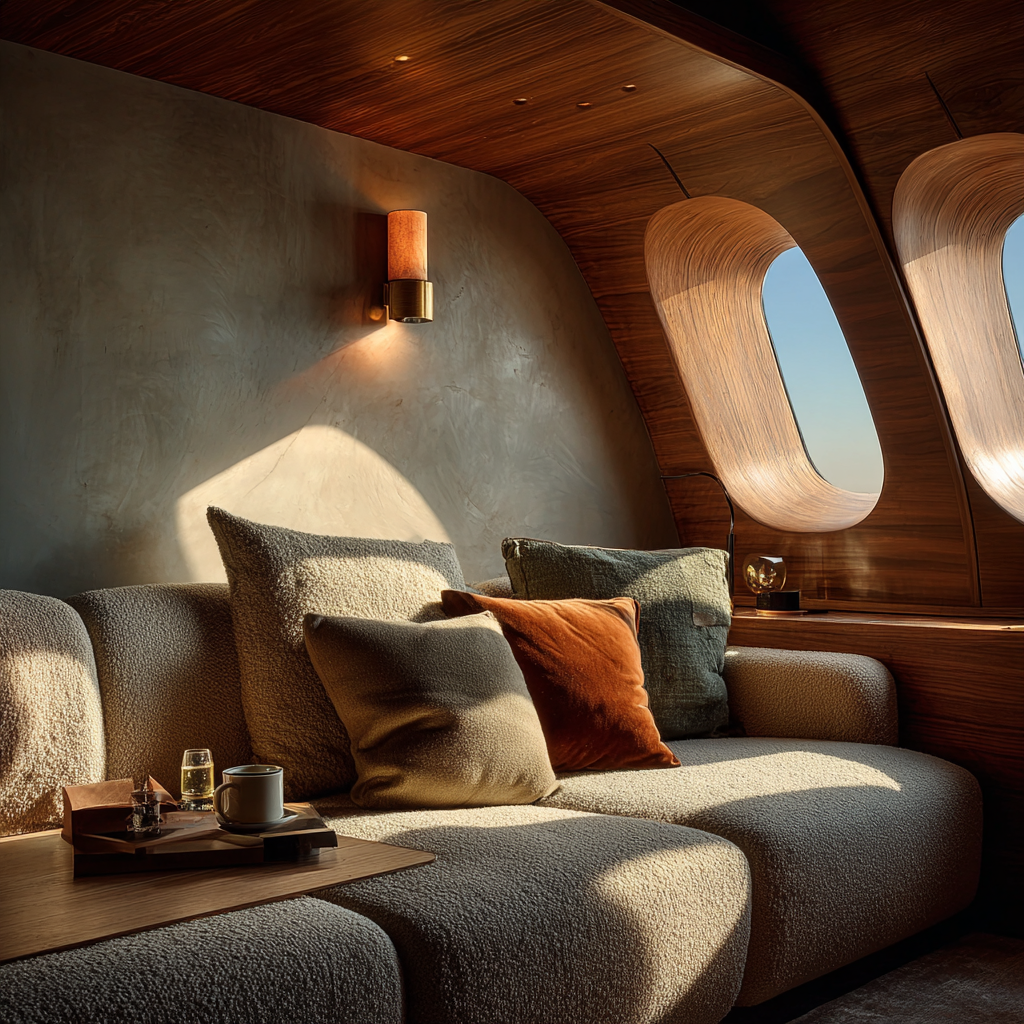
Material choice is where this becomes most apparent. The plastic looking finishes, no matter how refined, flatten the experience. Plastic is not luxury. At the other end of the spectrum, Emirates sometimes stretches its visual language toward excess, flirting with tacky. The ideal solution lies in between. Wood, for me, remains the most noble material. It brings warmth, texture, and humanity to a space. Paired with soft, ambient lighting, it creates calm and intimacy. After ten hours in the air, nobody wants bright white surfaces or clinical illumination. They want to arrive rested, grounded, and cocooned.
My personal perspective is that Air France had an opportunity to strike this perfect balance, between Emirates’ theatrical confidence and French restraint, and stopped just short. La Première is tasteful, but cautious. A first class suite should feel like your own private aircraft, not a beautifully designed section of a commercial plane. Privacy should be architectural, not symbolic. Space should be generous, not negotiated. Materials should comfort, not impress on a spec sheet.
Air France has the heritage, legitimacy, and cultural authority to lead first class globally. But until it embraces bolder privacy, warmer materials, and a more emotionally charged sense of space, Emirates will continue to define what the world believes first class should be.